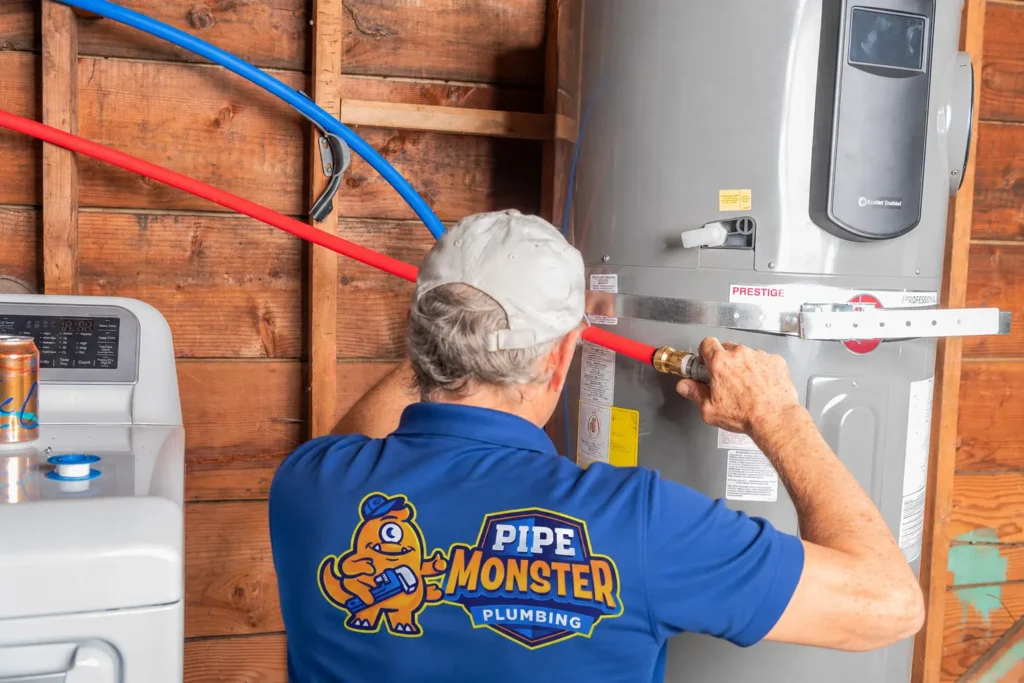
A water heater installation is not just placing a new unit in a home. It is a system setup that needs to match water demand, pipe condition, and local water behavior.
In Holland and Cascade homes, I usually see installation problems happen when the system is not matched to real household usage. Either the unit is undersized, or it is installed without considering water hardness and pipe flow conditions. That leads to early breakdowns, uneven heating, or constant strain on the system.
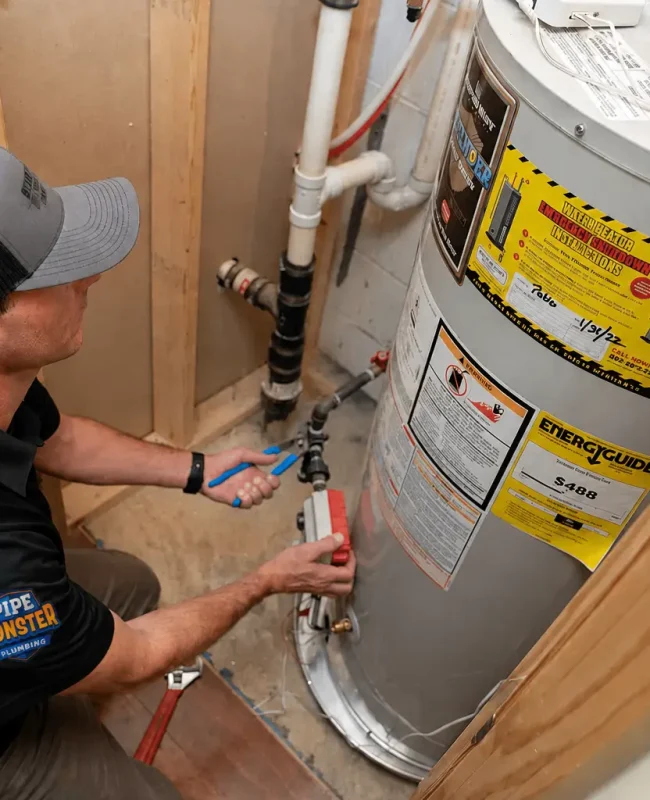
Pipe Monster Plumbing installs water heaters based on system requirements, not just equipment replacement.
A water heater works as part of a full plumbing system. It connects directly to water supply lines, pressure systems, and fixture demand patterns.
A correct installation must align with:
household water usage volume
pipe material condition (copper, PEX, galvanized)
incoming water hardness level
pressure stability across the system
fuel type availability (gas or electric)
If any of these are ignored, the system develops performance issues early.
Gas systems heat water through a burner assembly located under the tank. These systems recover faster but require proper venting and gas line safety calibration.
Electric systems use internal heating elements inside the tank. These are simpler to install but depend heavily on a stable electrical load and are sensitive to sediment buildup over time.
I love Tankless systems, because they heat water on demand. These require precise flow rate matching and clean water conditions. If undersized, they struggle during simultaneous fixture use.
I don’t install a system without checking how the home actually uses water.
We inspect:
daily hot water demand patterns
number of fixtures and simultaneous usage points
pipe diameter and flow capacity
water hardness level in the area
existing plumbing condition and corrosion level
pressure stability from the main supply line
location suitability for installation
This determines whether the home needs a tank system or a tankless setup.
+1 (616) 836- 3100
In most cases, yes if installed correctly. Tankless systems heat water on demand and are more efficient. But they require proper sizing and clean water conditions to perform well long-term.
A straight new installation is faster. Upgrading from an old system to a new one takes more time depending on pipe condition, system type, and whether any plumbing adjustments are needed.
Not always. But if existing pipes show corrosion, scaling, or restricted flow, partial pipe updates may be needed before the new heater can perform correctly.
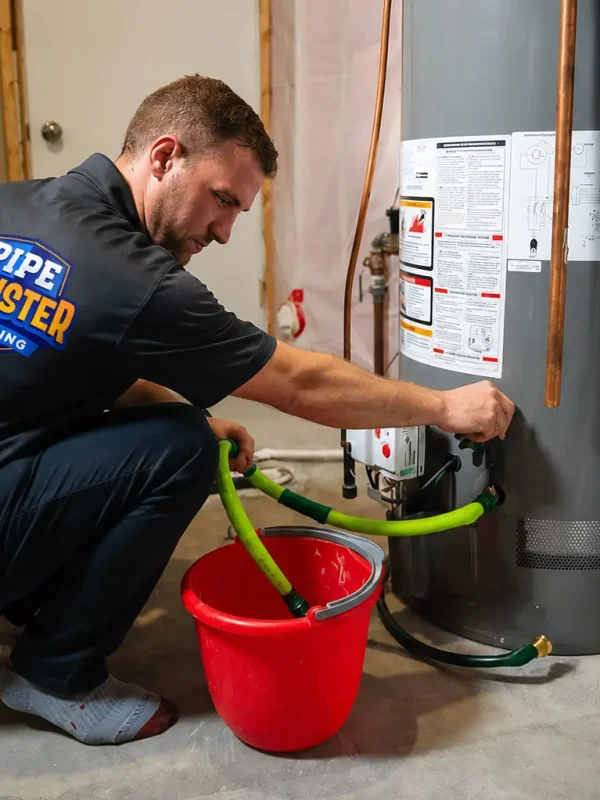
Yes. Minerals from hard water build sediment inside the tank over time, which slowly affects heat transfer and long-term system performance. A water softener is recommended alongside installation.
An undersized system runs out of hot water quickly and wears out faster. An oversized system wastes energy and can accelerate sediment buildup in low-use tanks. Correct sizing is critical.