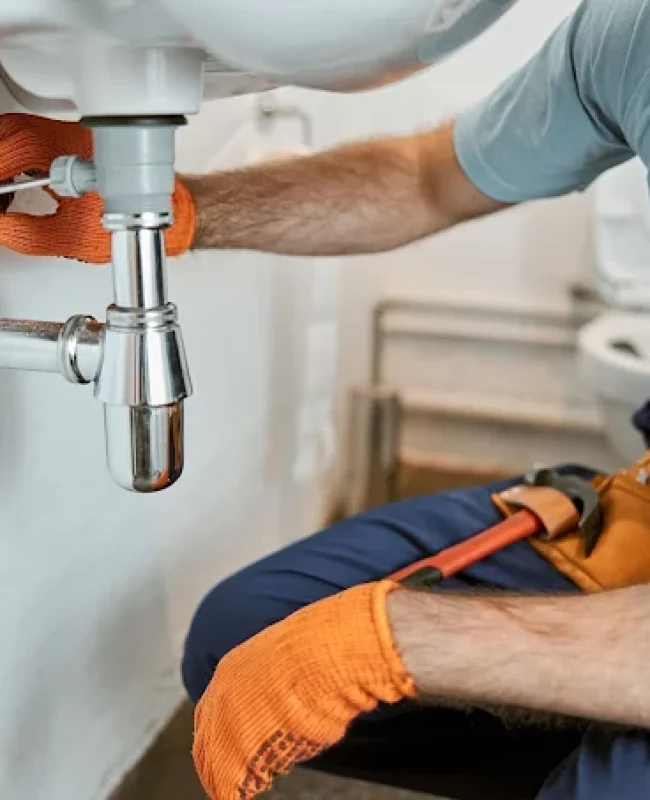
Allendale is a little different from Holland or Cascade. The first thing that comes to my mind isn’t the plumbing. It’s the way many homes are used. Because of Grand Valley State University, thousands of students live in off-campus rentals every year. I’ve worked in homes that were originally built for a family of four but are now housing five or six students. The interesting part is that the bedrooms changed over the years. The plumbing usually didn’t. Honestly, that’s where many problems begin. A homeowner and a student rental can have the exact same pipes, the exact same water heater, and the exact same bathroom. But the plumbing behaves completely differently because the number of people using it has changed. Think about a typical weekday morning. In a family home, people usually wake up at different times. Someone showers at 6:30. Another person gets ready at 7:15. Someone washes dishes later. The plumbing system gets small breaks between each use.
Honestly, I don’t expect anyone to hire us just because we say we’re good at plumbing. You should ask questions. Read reviews. Compare companies. That’s exactly what I would do if someone was working on my home. What usually earns people’s trust isn’t a sales pitch. It’s when they realize we’re trying to solve the actual problem instead of selling the biggest repair. There have been plenty of times when a customer thought they needed a full pipe replacement, but after checking the system, a smaller repair was all that was needed. And sometimes it’s the opposite. A simple leak turns out to be a warning sign that the pipe has been failing for years. That’s why every job starts with finding the cause, not guessing the solution.
I’ve noticed something over the years. Plumbing problems rarely happen without a reason. A drain that keeps clogging usually has more going on than grease sitting inside the pipe. Low water pressure isn’t always the city’s water supply. A leaking fitting isn’t always the part that failed first. Plumbing systems are connected, so one issue often creates another somewhere else. That’s why I spend time inspecting the system before reaching for my tools. It saves homeowners from paying for the same repair again and again.
Working in Allendale has taught me things I wouldn’t have learned anywhere else. Many homes near Grand Valley State University are used very differently today than when they were built. A house designed for one family may now have several students living under the same roof. That changes how often drains, water heaters, showers, and supply lines are used every day. Instead of treating every house the same, I look at how the property is actually being used. That helps me recommend repairs that make sense for your home instead of giving everyone the same answer.
The thing is, shortcuts almost always become expensive later. I’ve repaired plumbing where someone wrapped tape around a leaking pipe, patched over water damage without fixing the leak behind it, or replaced one fitting while the rest of the line was already failing. Those repairs don’t last. I’d rather explain what’s happening, show you the options, and let you make the decision with all the information in front of you. That’s how Bryson and I have always worked, and it’s the reason many of our customers call us again when they need help with another plumbing problem.
When I get a slow-drain call in an Allendale rental, I check whether the branch is carrying load beyond its original fixture count before assuming the clog is purely debris-related. A 2-inch branch sized for a single full bath group performing within typical use frequency behaves very differently once five tenants are cycling through it daily. I clear the immediate blockage, but I also check whether the actual usage pattern is putting the line under recurring stress that will bring the same call back in a few months, regardless of how well it is cleaned.
In rental properties, the gap between when a leak starts and when it gets reported tends to be longer, since no single tenant feels direct ownership of the problem. I look at the saturation pattern around the source to estimate how long a leak has likely been active, which affects whether I am dealing with the leak alone or secondary damage to the subfloor or cabinetry underneath it.
Sectional repipe work in Allendale rentals often comes down to undersized branch lines that were never upgraded after a home’s occupancy increased. If a property’s bathroom group branch is running at or near its DFU capacity ceiling for its pipe size, the fix is not just clearing whatever is currently restricting it. It is confirming whether the branch needs to move up a pipe size to handle the load the property is actually generating now.
This is the single most common call I get from Allendale landlords. I calculate actual peak hour demand based on current occupancy and typical schedule overlap, not the home’s original construction specs, and match that against the FHR of available units. In most conversions from a 4-person household to a 5 or 6-bedroom rental, the math points to either a higher-capacity gas tank, or in some cases a tankless system sized for simultaneous draw, since tankless recovery is not constrained by stored volume the same way a tank unit is.
Hard water from the regional groundwater source affects every property the same way, but the practical impact compounds faster in a rental running at a higher fixture-use frequency. Scale buildup inside a water heater reduces effective tank volume over time, which lowers the usable-storage portion of the FHR calculation. In a property already running close to its peak demand ceiling, that gradual scale-related capacity loss is often what tips a marginal water heater into a consistently failing one.
Mixing valve components are rated for a certain number of duty cycles, and a valve in a shared student bathroom goes through far more cycles per month than the same valve in a single-occupant bathroom. When I am called for shower repairs in a high-occupancy rental, I check cartridge and valve wear specifically, since this is usually the first component to show measurable wear under that kind of repeated daily cycling.
A house does not become a different plumbing system just because it changed from owner-occupied to rental, or because the bedroom count went from three to six.
The pipe sizing, the vent sizing, and the water heater capacity were all calculated against a specific fixture-use assumption at the time of construction. When occupancy changes substantially, that original calculation stops matching reality, even though nothing about the pipe itself has physically failed.
That is the question I am actually answering on every Allendale call: is this a maintenance issue, or is this a sizing mismatch between what the property was built for and what it is being asked to handle now?
Those require two completely different fixes, and treating a sizing mismatch as a simple repair is why the same problem keeps coming back.
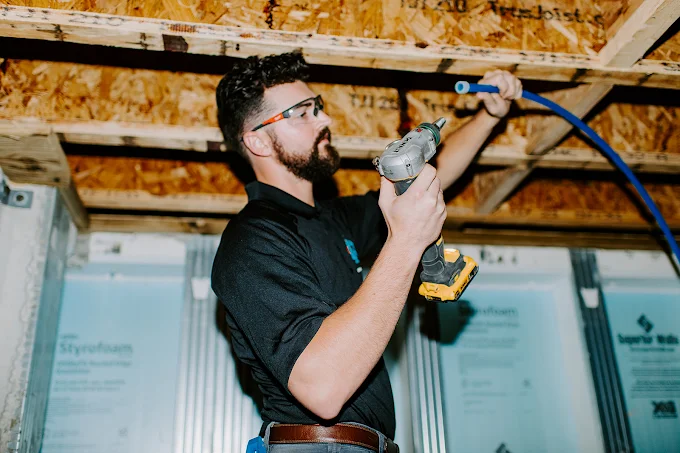
Every service follows the same process.
I check how the issue connects to the full plumbing system, not just the visible problem.
Repair is done based on system condition, not just the damaged section.
Water pressure, drainage, and flow stability are checked before closing the job.
The pipe’s DFU rating, the code factor used to size it, was based on a lower-occupancy household using it at typical residential frequency. Higher occupancy compresses usage into shorter windows than the line’s original sizing assumed, which increases the chance of slow drainage and recurring buildup even without a change in what is being put down the drain.
This usually comes down to the unit’s First Hour Rating being exceeded. A water heater sized for a four-person household’s peak hour demand will fall short once five or six people are showering within a similar compressed morning window, since their combined draw exceeds what the tank’s usable storage plus recovery rate can deliver.
It can become one. The drain branch, vent, and water heater were all sized against the original fixture count and expected usage frequency. Adding occupants without changing the fixture count increases usage frequency well beyond what those original calculations assumed, even though the pipes themselves have not changed.
This is often a vent capacity issue rather than a leak. When usage frequency on a branch exceeds what its vent size was rated for, negative pressure in the line can pull water out of nearby trap seals, which lets sewer gas into the room without any visible plumbing failure.
Sizing should be based on actual current occupancy and peak-hour usage overlap, not the home’s original bedroom count or the unit that is currently installed. Calculating peak hour demand from the realistic shower and fixture-use schedule, then matching that against a unit’s First Hour Rating, is the only way to confirm the replacement will actually hold up.
If you are in Zeeland and dealing with a drain issue, a leak, a water heater problem, or anything else in your plumbing system, call Pipe Monster Plumbing. Bryson J Altvater and I will come out, look at what is actually happening, and fix it the right way
Lorem ipsum dolor sit amet, consectetur adipiscing elit. Ut elit tellus, luctus nec ullamcorper mattis, pulvinar dapibus leo.