Most people who call me have already tried something.
They bought a bottle from the hardware store. Poured it in. Waited. The drain moved for a week or two. Then slowed down again. Then they tried a different product. Same result.
By the time they call Pipe Monster Plumbing, they have usually spent money on three or four products, and the drain is in the same condition it was two months ago, sometimes worse.
I am not saying this to sell you on calling a plumber for every slow drain. I am saying it because after 15+ years of opening drain lines in Holland and Cascade, I know what these products actually do inside a pipe versus what the label says they do. And there is a real gap between those two things.
What I Have Actually Seen Inside Drain Lines Here in Holland
I want to start here because this is the part that changes how you think about drain cleaning products.
I have pulled lines in homes around Holland near downtown, out toward 8th Street, near Holland Civic Center Place, where the pipe looked completely normal from the outside. No visible damage. No leaks. But when I got inside the line, the interior diameter was visibly narrowed. Not a little. In some of these older homes,s I could see the pipe had maybe half its original flow space left.
That narrowing was not from one big clog. It was from years of layers. Grease from the kitchen that cooled and stuck to the pipe wall. Soap residue that is bound to the grease. Hair that caught on the rough surface of those layers was created. And on top of all of that, mineral deposits from our local hard water calcium and magnesium that come naturally in the groundwater here in Holland and Cascade, and leave scale buildup inside the pipe as water passes through.
Each layer by itself is thin. But over months and years, those layers stack. The pipe interior gets rougher and narrower. Water still moves through, just slower. And slower means more time for the next layer to catch before anything gets a chance to clear.
This is what is actually happening inside a drain that keeps coming back slowly. It is not one clog. It is a system that has been building up for a long time.
When you understand this, you understand why the product you poured in last month only worked for two weeks.
What a Drain Cleaning Product Actually Does and What It Cannot Do
A chemical drain cleaner, Drano, and similar products create a reaction inside the pipe that generates heat. That heat and chemical action breaks down soft organic material t, he fresh grease, the hair, the soap sitting in the drain opening or just behind it.
What it cannot do is remove the hardened layers on the pipe wall. The scale that has been building for years. The mineral deposits from hard water that have dried and bonded to the inside of the line.
So what happens is this. You pour the product in. It eats through the soft, fresh material in the middle of the pipe. Water starts moving again. You think the drain is clear. But the walls of the pipe are still narrowed. The rough surface is still there. Within a few weeks, new material catches on it, and the drain slows down again.
This is the cycle I see in house after house here in Holland. The product is doing what it is designed to do. But the problem it is designed to solve is only one part of what is actually happening in the pipe.
The other thing I have seen, and this is something I want to be direct about, is what repeated chemical cleaner use does to older pipe materials over time.
A lot of homes in Holland, especially the ones built before the 1980s, have galvanized steel drain pipes or cast iron stacks. These pipes have a zinc coating on the inside that protects the steel underneath. When strong chemical cleaners go into these pipes repeatedly, the heat and chemical reaction break down that zinc coating faster than normal aging would. Once the coating goes, rust starts on the steel underneath. A pipe rusting from the inside is going to fail eventually. And usually it fails somewhere behind a wall or under a floor.
I have walked into homes where the drain system needed full replacement, and part of the story was years of chemical product use accelerating damage to pipes that were already aging. The two things together moved up the timeline significantly.
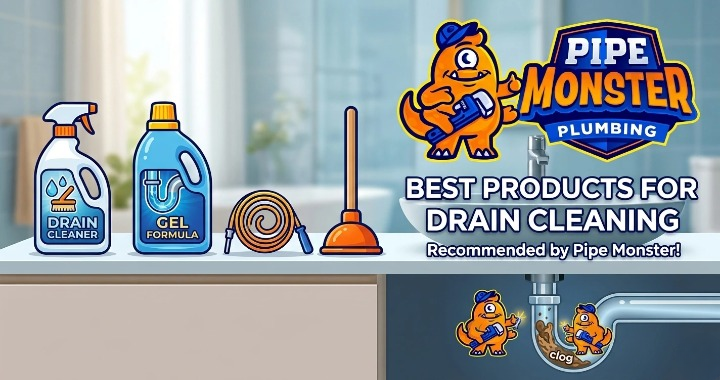
The Products I Think Are Worth Using And How I Actually Think About Them
I am not going to give you a ranked list with star ratings. That is not how I think about this.
I think about it based on what type of pipe you have, what type of buildup you are dealing with, and what you are trying to accomplish.
For older homes in Holland with galvanized or cast-iron pipes
Enzyme cleaners. Products like Green Gobbler enzyme cleaner or Bio-Clean. These use natural bacteria that digest organic material, grease, hair, and ap residue without generating heat and without a harsh chemical reaction. They are slow. If your drain is completely blocked tonight, an enzyme cleaner is not going to fix it tonight. But they do not accelerate corrosion on older pipe materials. They are safe for the pipe systems that exist in a lot of homes in Holland. The way to use them is at night when the drain will not be used for several hours. The bacteria need time to work without being washed away. For the kitchen drain, especially where grease goes in every day, using an enzyme cleaner once a month as a maintenance habit keeps the buildup from hardening into something that nothing can touch.
For newer homes with PVC pipes and a one-time clog
A chemical cleaner can work fine in this situation. Fresh clog, modern pipe material, used once and not repeatedly. In this case, he product does what the label says, nd the pipe material can handle it.
For any drain, before any product
A drain claw or hair removal tool for bathroom drains. A drain snake for kitchen drains. Before I pour anything into a drain, I want to know what I am dealing with. A tool tells you. If you put a drain claw into a bathroom sink drain and pull out a handful of hair, you know what the clog was. You removed it. Clean. No chemical residue sitting in the pipe.
A hand auger reaches further than any liquid product into a kitchen drain and physically breaks up or removes what is causing the restriction. The product cannot tell you if it worked. The tool shows you.
The Situation I See Most Often And Why Products Keep Failing in It
I get calls from clients who describe something like this. The bathroom sink is slow. The kitchen drain is sluggish. The tub drains, but takes longer than it used to. They have been putting product in each one individually over the past few months. Nothing has worked for more than a couple of weeks.
When multiple drains across different areas of the house are slow at the same time, the problem is rarely those individual drains.
The problem is in the main drain line that all of those fixtures share. Everything in a house drains into a common line that runs to the sewer. When that line has significant buildup or a partial blockage, every fixture connected to it starts showing slow drainage. You can pour product into each inain all day, nd it will not reach the main line.
I saw this pattern repeat itself in house after house. People spend money on product after product, treating each drain as a separate problem, while the actual issue gets worse in the shared line the whole time.
If you are dealing with multiple slow drains at the same time, stop putting product in individual drains. That is not where the problem is.
What Hard Water Is Actually Doing to Your Drain Lines in Holland and Cascade
I want to spend a moment on this because it is specific to where we live, and most drain cleaning articles are not written for Holland homeowners.
The groundwater here in Holland and Cascade has high mineral content. Calcium and magnesium. These minerals are dissolved in the water when it comes into your home, and they leave deposits inside the pipe as water moves through and cools.
These deposits are not organic material. They are mineral scale. An enzyme cleaner cannot digest them. A standard chemical cleaner can soften fresh light deposits, but cannot remove hardened scale that has been building up for years.
When the mineral scale forms inside a pipe creates a rough surface. And a rough surface inside a drain line is where everything else, grease, hair, soap, catches and stays. So in a home without a water softener, buildup happens faster because the pipe interior is rougher than it would be with treated water.
I have seen this in homes across Holland. The drain issue looks like a grease problem or a hair problem. But underneath it, the real foundation of the problem is mineral scale that has been narrowing the pipe for years and giving everything else a surface to stick to.
No store product fixes this at the root. The long-term fix is a water softener that converts those minerals before they enter the pipe system. The short-term fix is professional cleaning that can reach and remove hardened scale, not just clear what is sitting on top of it.
When to Stop Using Products and Call Someone
I am going to be straightforward here.
If the same drain keeps coming back slowly within two to three weeks of cleaning it, the pipe needs to be looked at, not cleaned again with the same product. Something inside that line is not being addressed by surface cleaning.
If multiple drains in different rooms are slow at the same time, the issue is in the shared main line, and no store product is going to reach it.
If you hear gurgling from a toilet or a drain in another room when you run the kitchen sink or shower, air is being pushed backward through the system by a blockage somewhere in the shared lines.
If water backs up into a tub or floor drain when you run the washing machine or kitchen sink, stop everything and call someone. This is a main line issue that will get worse.
If your drain has a bad smell that does not go away after cleaning, there is buildup deep in the line that surface products are not reaching, or there is something else happening in the line that needs to be seen.
Bryson J Altvater and I start every drain job by finding what is actually causing the problem. Not just clearing what is visible. We check the condition of the pipe and look at what the buildup pattern is telling us about what is happening deeper in the system. That is why the same clients do not call us back a month later with the same problem.
If you are in Holland or Cascade and the products have not worked, call us. We will find the real issue.
FAQ
Why does my drain slow down again a few weeks after I clean it?
Because the surface clog was cleared, but the buildup on the pipe wall is still there. The mineral scale, the hardened grease layer, an he rough surface that everything catches on, none of that was removed. New material catches oni,t and within a few weeks the drain is slow again. This cycle does not stop until the pipe wall itself is properly cleaned or the buildup is addressed at the source.
Is Drano safe to use in my Holland home?
It depends on your pipe material. For newer PVC pipes and a one-time clog, it can work fine. For older galvanized steel or cast iron pipes, repeated use speeds up corrosion on the pipe material. If your home was built before the 1980s and you have not replaced the drain system, I would use enzyme cleaners for maintenance instead of chemical products.
Why are multiple drains in my house slow at the same time?
This almost always points to the main drain line, not individual drain problems. All fixtures in a home share a common drain line. When that line has built up or a partial blockage, every fixture connected to it shows slow drainage. Putting product in individual drains will not fix a main line issue.
Does hard water affect my drains in Holland?
Yes, directly. The mineral content in our local water leaves calcium and magnesium deposits inside drain pipes as water passes through. These deposits narrow the pipe interior over time and create a rough surface where grease and hair catch more easily. Homes without water softeners in Holland and Cascade accumulate drain buildup faster than homes with treated water.
When should I stop trying products and call a plumber?
When the same drain keeps coming back slowly within two to three weeks. When multiple drains across different rooms are slow at the same time. When you hear gurgling from drains you are not using. When water backs up into other fixtures. These are signs that the problem is beyond what a surface product can reach.