How a tankless water heater works
There is no stored hot water. When you open a hot tap, a flow sensor detects water moving through the unit, the burner or electric elements fire, and water is heated as it passes through a heat exchanger. When you close the tap, it shuts down.
That is why a tankless unit does not run out the way a tank does, and why it does not spend energy keeping a full tank hot overnight. It also means the unit has limits: it can only heat so many gallons per minute by so many degrees.
Most units need a minimum flow before they fire. A trickle from a faucet may not be enough to turn the burner on, which surprises some people the first time.
Sizing to flow rate and simultaneous use
A tankless heater is sized by two numbers: the total flow of the fixtures you run at once, and the temperature rise, which is how much the unit has to warm the incoming water. In West Michigan, incoming water is colder in winter, so the same unit delivers less hot water in January than in August.
We size for your realistic peak, such as a shower and a dishwasher together, or two showers in the morning, in the coldest part of the year. Undersizing is the most common reason tankless owners are disappointed.
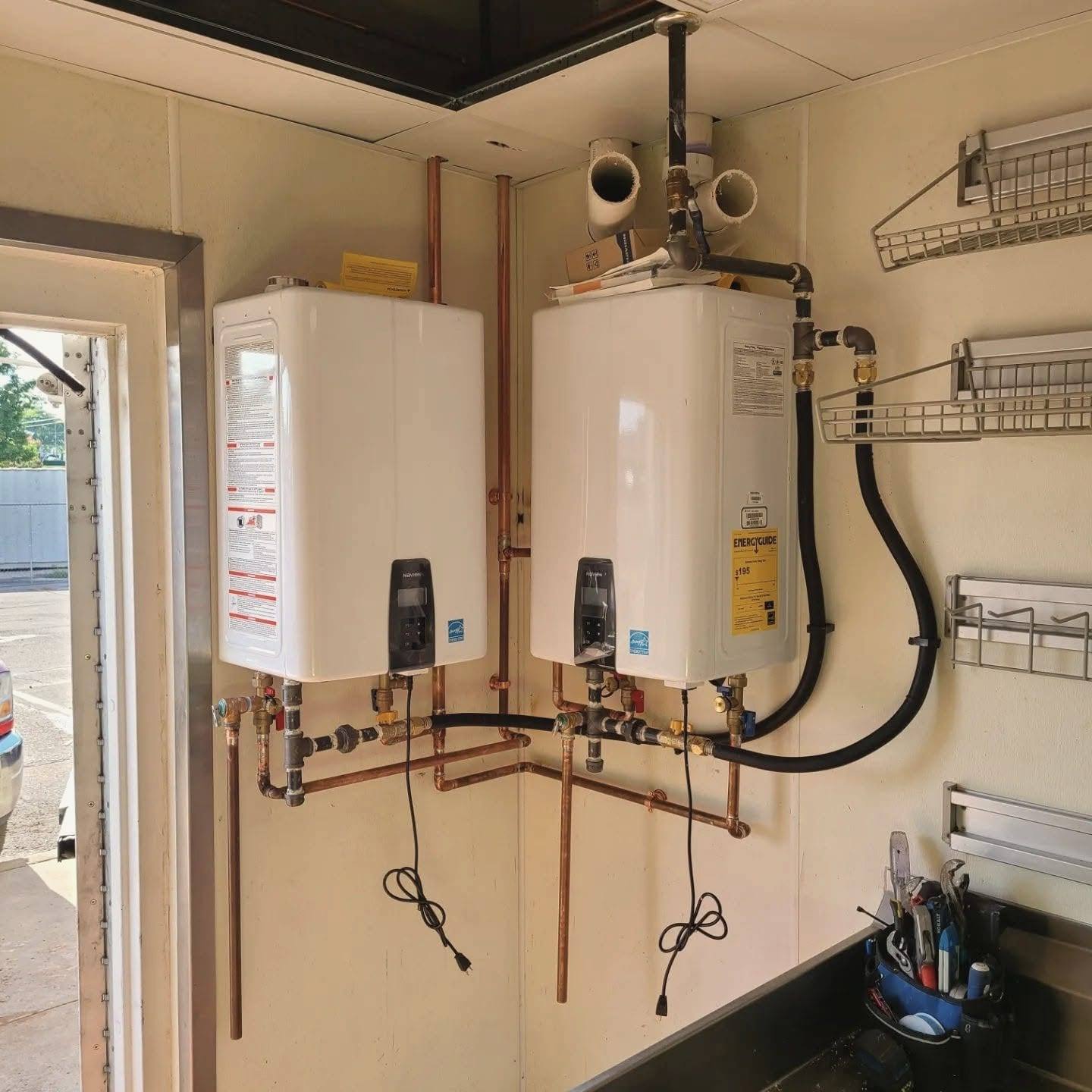
Larger homes sometimes do better with two units, and we would rather recommend that than install one that struggles.
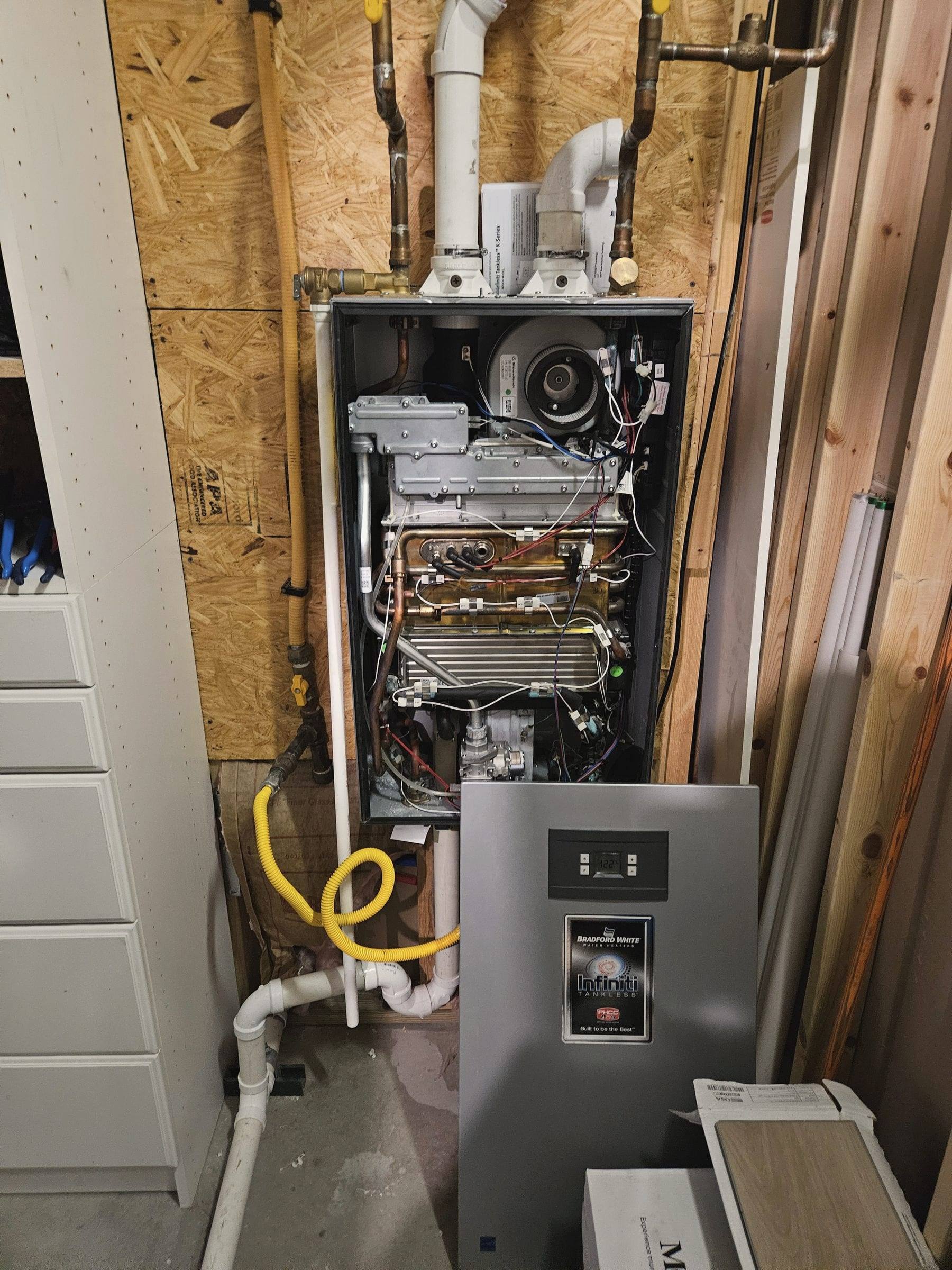
Gas line, venting and electrical requirements
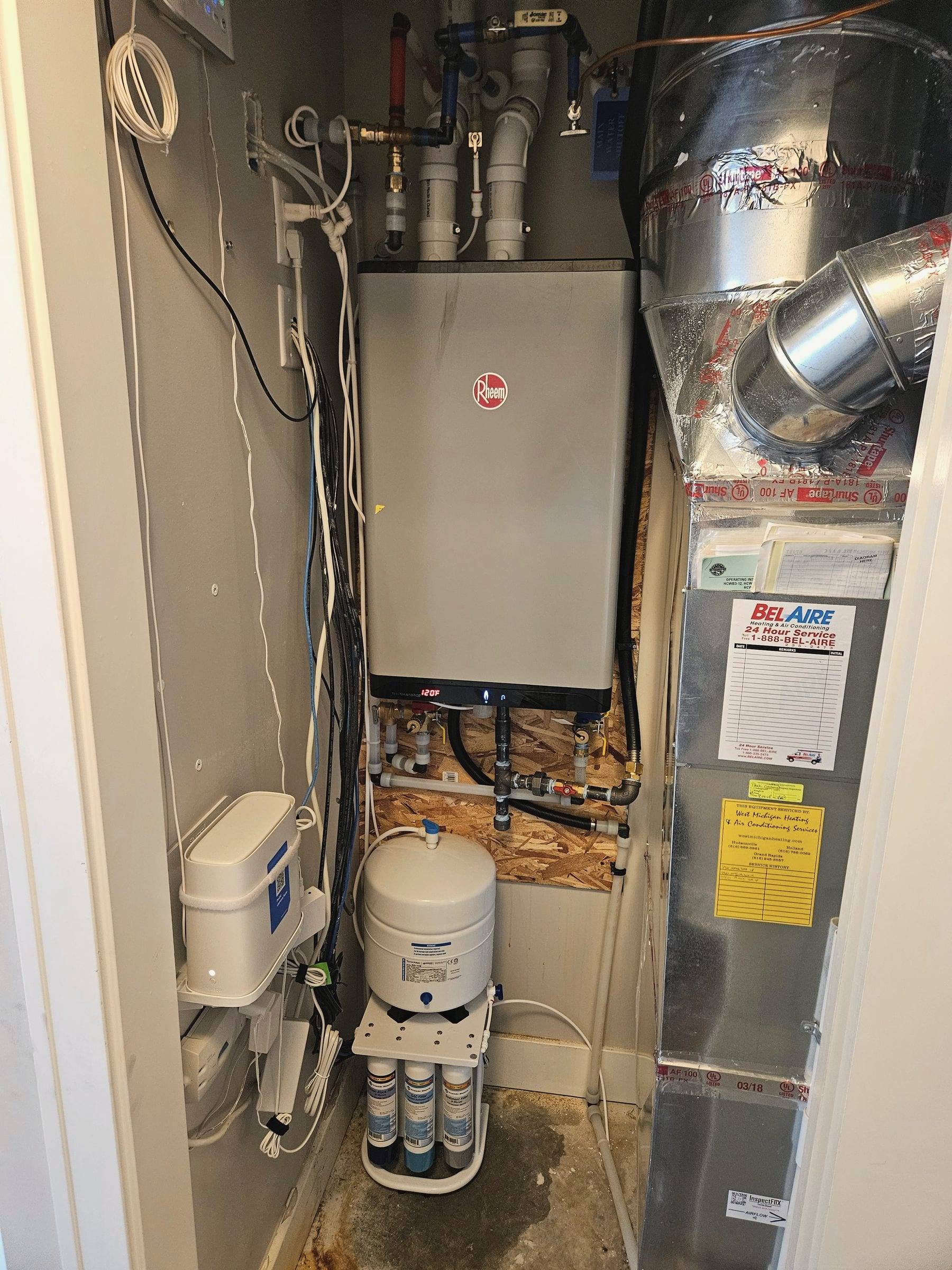
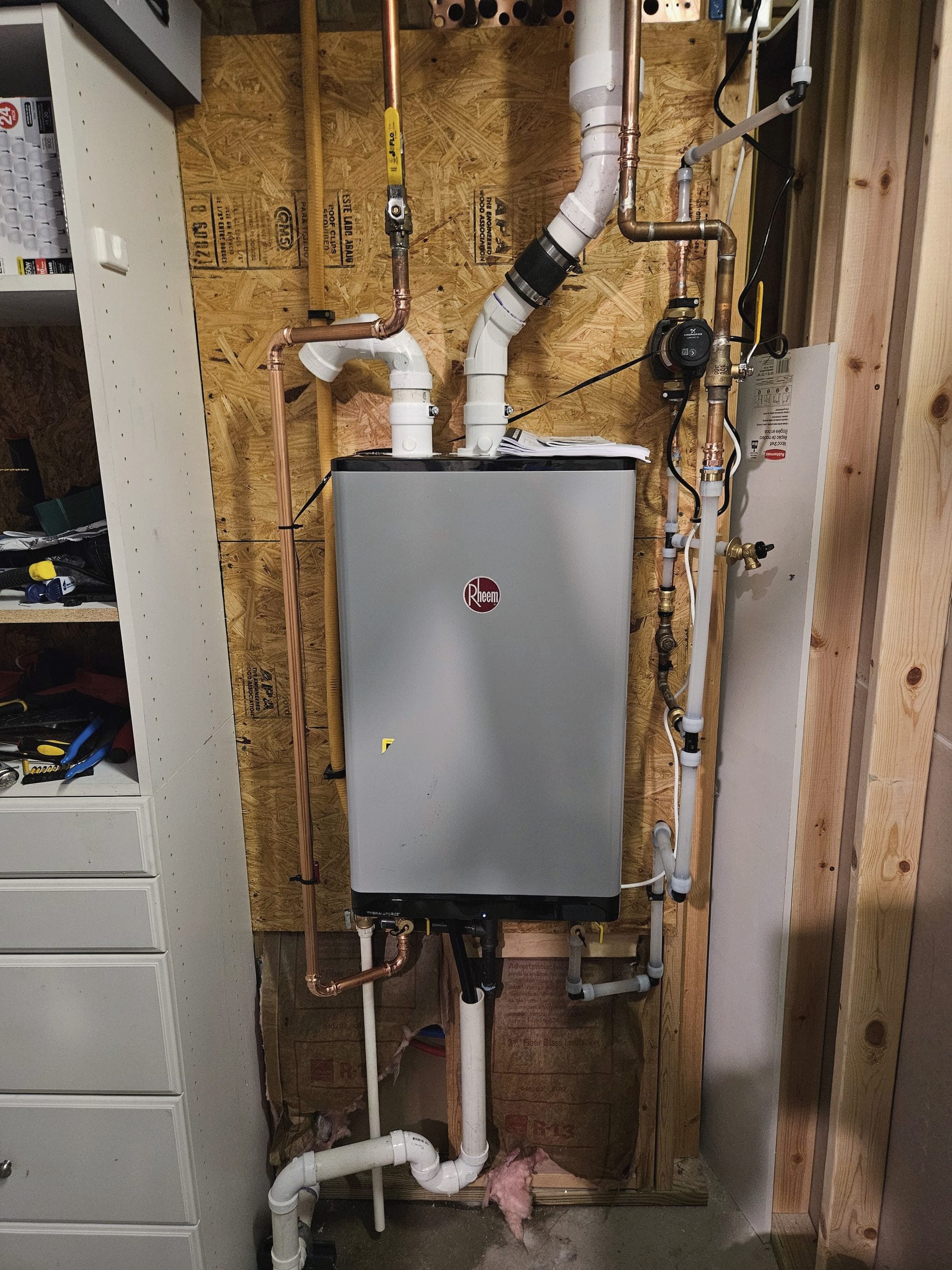
A gas tankless unit fires hard and fast, so it needs much more gas per hour at full output than a typical tank. Existing gas piping often has to be upsized from the meter to the heater, and every connection is leak tested before the unit runs.
Tankless units vent through a dedicated vent to the outside, often through a side wall. Condensing models produce acidic condensate that has to be drained properly, usually with a neutralizer. Even gas units need an electrical outlet for their controls and fan.
Electric tankless units avoid venting but can require a very large electrical capacity, often more than an older panel can provide. That is a question to answer before choosing one.
Scale, descaling and water treatment
Minerals in water form scale on the hot surfaces of the heat exchanger. Scale insulates the exchanger, restricts flow, causes overheating and is behind many error codes and early failures. Tankless units are more sensitive to it than tanks.
Descaling means isolating the unit with its service valves and circulating a descaling solution through the heat exchanger. How often depends on your water and usage; harder water needs it more often. The small inlet filter screen should be cleaned at the same time.
Holland's city water comes from Lake Michigan, while homes on wells can have very different water just a few miles away. If your water is mineral-heavy, a softener or other whole-home treatment can protect the heater, and we can test your water to see what it actually needs.
Common tankless repairs, and the units we choose
Error codes point us toward ignition failure, flame loss, venting or air intake problems, low gas pressure, overheating from scale, or flow sensor faults. We confirm the cause with testing before replacing parts, because the same code can have more than one source.
The cold-water sandwich is a short burst of cold water between two bursts of hot, caused by the time the unit takes to fire again after a quick stop. Some models handle it better than others, and the right settings help.
We are selective about the tankless units we install. Some newer designs have fewer parts that need maintenance and heat exchangers built to resist corrosion, and we buy through a local plumbing supplier that keeps the units we use in stock.