
Frequently asked questions
Plumbing questions, answered
Working with Pipe Monster
10 questions
What areas does Pipe Monster Plumbing serve?
We are based in Holland, Michigan, and serve Holland and the surrounding West Michigan towns, with Zeeland, Hudsonville and Saugatuck closest to home. We also work in Allendale, Jenison, Grand Haven, Spring Lake, Coopersville, Grand Rapids, Wyoming and Kentwood. If you are not sure whether you are in range, call (616) 836-3100 and ask.
Is Pipe Monster Plumbing licensed in Michigan?
Yes. James F. Altvater holds Michigan Master Plumber license #8111864 and Plumbing Contractor license #8003264, and Bryson J. Altvater holds Michigan Journeyman Plumber license #8225276. Michigan license records are public, so you can look any of these up with the State of Michigan before you hire us.
What should I do if water is leaking right now?
Close the main water shutoff if you can do it safely, or the shutoff valve on the fixture that is leaking, and keep away from water near outlets and electrical panels. Then call us at (616) 836-3100. We will ask what you are seeing and tell you honestly when we can get there.
How do you decide between a repair and a replacement?
We find out what failed and why before recommending anything. Then we lay out the options: the age and condition of the equipment, whether a manufacturer warranty still applies, what the repair involves, and whether the same problem is likely to come back. Sometimes a single part is the right answer. You make the decision with the reasoning in front of you.
Will you tell me the cost before you start?
Yes. We explain what we found and what each option involves before any work begins, so you are not surprised by the scope. Every home is different, which is why we do not publish one-size-fits-all prices on the website; call and describe the problem and we will talk you through what to expect.
Who will come to my house?
Pipe Monster is a small family business. Our reviews mention Jim and Bryson Altvater by name because they are the plumbers our customers meet. We keep the team small on purpose so the work in your home gets real attention.
Why do you ask so many questions when I call?
Because the answers often point to the cause. We usually ask how long the problem has been going on, whether you recently bought the home, and whether it has happened before. A recurring problem or a recent home purchase can mean the visible issue is part of something bigger, and knowing that helps us bring the right parts and plan the right amount of time.
Do you work on older homes?
Yes. Older Holland-area homes can have galvanized steel water lines, cast iron drains and decades of patchwork repairs. We look at the condition of the piping around the problem, explain what is worth fixing now and what can wait, and keep wall openings to what the job actually needs.
Can you test my water?
We can test water on site for the things that affect plumbing, such as hardness, which tells us whether a softener or other treatment would protect your pipes and water heater. That test is not a drinking-water safety test. If you are on a private well, use a certified lab for safety testing, and for complex treatment questions we work alongside a water-filtration specialist.
How can I prepare for a visit?
Clear a path to the problem area and to the water heater and main shutoff if you know where they are. Note when the problem started, what you have noticed and anything you have already tried. If there are pets in the home, plan where they will be while we work. Those few minutes save time once we arrive.
Our services
3 questions
What plumbing problems do you fix in Holland, MI?
We handle the everyday plumbing problems homes in Holland and nearby West Michigan towns run into: water heaters that stop heating or leak, leaking and corroded pipes, clogged and slow drains, sump pumps, hard water and corrosion, and showers that leak or need replacing. Whether the issue is in a wall, under a floor or at the water heater, we look for the cause, not just the symptom.
How do I know which plumbing service I need?
You don't have to know, and most people don't. Call us and describe what you are seeing. We will ask how long it has been going on, whether you recently bought the home, and whether it has happened before. Low pressure, slow drains, discolored water and odd pipe noises each point to different causes, and we sort out which one you have.
What does it mean that you retest before leaving?
After the repair, we turn the water back on and check that the problem is actually fixed and that everything we touched is dry. Then we walk the house and listen for running water. That takes slowing down, which is why we block time for each job instead of rushing from one call to the next.
Water heaters
Water Heater Repair
6 questions
Is it worth repairing a water heater, or should I just replace it?
It depends on what failed, how old the unit is, and whether the manufacturer warranty still covers the part. A thermocouple, element or relief valve on a sound tank is usually worth fixing. A major part on an older, out-of-warranty tank often is not, and a leaking tank body cannot be repaired. We walk you through those factors before any work starts.
Why does the pilot on my gas water heater keep going out?
The most common cause is a worn thermocouple that no longer holds the gas valve open. It can also be a dirty pilot, a draft or venting problem, or a failing gas control valve. Because several of these involve gas and combustion, we recommend having a licensed plumber diagnose it rather than relighting it over and over.
My electric water heater runs out of hot water fast. What is wrong?
Most often the lower heating element or its thermostat has failed, so only the top of the tank is heating. Heavy sediment around the lower element can cause the same symptom. Both are common repairs. If the elements test fine, the heater may simply be too small for how your household uses hot water now.
Water is dripping from the pipe on the side of my tank. Is that dangerous?
That pipe is the discharge line for the temperature and pressure relief valve, and it means the valve opened or is leaking. It can be a worn valve, high water pressure, or thermal expansion with no expansion tank. Do not cap it. Shut off the heater's cold supply if it is running steadily and call us so we can find the cause.
Does water quality in Holland affect my water heater?
It can. Holland's city water comes from Lake Michigan, and we find it fairly consistent, but homes on wells a few miles away can have very different water. Water that corrodes pipes or carries heavy minerals also wears on a water heater. If we see signs of that, we can test your water and explain whether treatment would help.
Do you repair tankless water heaters too?
Yes. Tankless units have their own common problems, including scale in the heat exchanger, clogged inlet screens, ignition faults and error codes that point to venting or gas supply issues. We diagnose the cause, make the repair, and explain how to keep the unit descaled so the problem is less likely to come back.
Water Heater Replacement
7 questions
How do I know my water heater needs replacing instead of repair?
The clearest sign is water coming from the tank body itself, or rust at the base or in the hot water. Repeated repairs, several parts failing together, and a major part failing after the warranty has ended also point toward replacement. If the problem is a single part on a sound tank, repair is usually the better answer.
How long do water heaters last in Holland homes?
There is no fixed number. Lifespan depends on the type of unit, how hard it works, how well it has been maintained, and especially the water. Water that corrodes pipes or leaves heavy minerals wears tanks out faster. Holland's city water comes from Lake Michigan and is fairly consistent, while well water nearby can vary a lot.
Can flushing save an old water heater?
Flushing can clear some sediment, which may quiet noise and help the unit heat more evenly. It cannot repair corroded tank walls, a spent anode rod after rust has spread, or damaged heating parts. On an older tank with advanced internal wear, flushing may not change the outcome, and replacement is the more reliable path.
Should I replace my tank with the same size?
If the old heater kept up with your household, the same size is usually right. If you often ran out of hot water, or your family or home has grown, a larger tank or one with faster recovery may serve you better. We look at your peak hot water use before recommending a size.
Is replacement a good time to switch to a tankless water heater?
It can be, since the old unit is coming out anyway. Tankless units save space and do not run out of hot water the same way, but they often need a larger gas line, new venting, and regular descaling. We look at what your home can support and explain the trade-offs before you decide.
How does a failing water heater affect the rest of my plumbing?
A worn tank can send sediment and rust into the hot water lines, where it can collect in faucet aerators and appliance screens. A failing relief valve or high pressure from thermal expansion can stress valves and connections. That is why we look at the whole system around the heater, not just the tank.
Do you update code items when replacing a water heater?
Yes. Older installations are often missing items current code expects, such as an expansion tank on a closed system, a proper relief valve discharge line, or correct venting. Replacement is the right time to bring those up to standard, and we point out anything we find when we look at the existing setup.
Water Heater Installation
7 questions
What size water heater do I need?
It depends on your busiest hour of hot water use, not just the number of people or bedrooms. We look at how many showers, baths, laundry and dishwasher loads overlap, then choose a unit with a first-hour rating or flow rate that covers that peak. A household with teenagers often needs more capacity than a couple in the same size home.
Should I choose a gas or electric water heater?
If your home already has gas and a workable vent path, a gas unit usually recovers faster and suits busy households. Electric units need no venting and are simpler to place but recover more slowly. The fuel you have, the location, and how you use hot water usually make the choice clear, and we will explain the trade-offs.
Do I need an expansion tank with a new water heater?
Often, yes. If your home has a check valve, backflow preventer or pressure reducing valve, heated water has no room to expand, and pressure can spike. An expansion tank absorbs that extra volume and protects the heater, the relief valve and your fixtures. We check how your system is set up and tell you whether one is required.
Can you add a second water heater to my home?
Yes, a second unit can make sense for a large home, an addition, or a bathroom far from the main heater. It might be a second tank, a tankless unit, or a small point-of-use heater. We look at where the demand is, what fuel and venting are available there, and whether a second unit is better than one larger one.
Why does a proper water heater install take time?
Because the small details matter. Piping connections, gas leak testing, venting, the relief valve discharge line and code items like an expansion tank each take care to do right. We put two people on an install and block time for each job so nothing gets rushed, then we retest the whole system before we leave.
Should I test my water before installing a new water heater?
It is a good idea if you are on a well or have noticed scale, staining or corroded fixtures. Water that is hard on pipes is also hard on a tank or tankless heat exchanger. A water test tells us whether treatment would help the new heater last, and it is most useful for homes on private wells, where water can vary a lot from one property to the next.
Do pipes need to be replaced when a water heater is installed?
Not usually. But if the piping near the heater shows corrosion, scale or restricted flow, updating those sections during the install can be the right call, because a new heater connected to failing pipe will not perform well. We show you what we find and only recommend pipe work that actually affects the install.
Tankless Water Heaters
7 questions
Is a tankless water heater worth it in Holland?
It can be, when your home can support the gas line and venting it needs and your water is treated or descaled regularly. Tankless units save floor space and do not run out of hot water the way a tank does. For a household that uses many fixtures at once, or wants the simplest swap, a tank may still be the better fit.
What size tankless water heater do I need?
It depends on how many fixtures you run at the same time and how cold your incoming water gets. Tankless units are rated in gallons per minute at a given temperature rise, and West Michigan's winter water is cold. We add up your realistic peak use and size for the coldest months so you are not short in January.
Why does my tankless water heater show an error code?
The code is the unit telling you which system tripped: ignition, flame, venting, gas pressure, overheating or flow. It narrows the search but does not always name the root cause, since scale or a clogged inlet screen can trigger several different codes. Note the code and call us; we test before replacing any parts.
How often should a tankless water heater be descaled?
It depends on your water and how much hot water you use. Homes with harder water need descaling more often than homes with treated or softer water. Many manufacturers recommend periodic flushing in their instructions. We can test your water and suggest a schedule, and a softener can stretch the time between descaling.
What is the cold-water sandwich?
It is a short burst of cold water you feel after turning hot water off and back on quickly. The water left in the pipes is still hot, but the unit needs a moment to fire again, so a slug of cold water passes through. It is a normal trait of tankless heaters that settings and model choice can reduce.
Do tankless water heaters need a bigger gas line?
Often, yes. A gas tankless unit draws far more gas at full output than a typical tank, and the existing line may not be sized for it along with the furnace and other appliances. We check the gas piping and meter before recommending a unit, and upsize the line when the install calls for it.
Can a tankless water heater work during a power outage?
No. Tankless units, including gas models, need electricity to run their controls, fan and ignition, so they stop heating when the power goes out. A standard gas tank with a standing pilot can keep making hot water without power. If outages are a concern for your home, that is worth weighing in the decision.
Leaks and pipes
Emergency Leak Repair
8 questions
Where is the main water shutoff in most Holland homes?
In most homes with a basement, the main shutoff is near the water meter, on the wall where the line enters from the street. Without a basement, check a utility room, a closet near the water heater, or the crawl space. Find yours before you need it, and if you cannot find it during a leak, call us.
My shutoff valve will not turn. What should I do?
Do not force it with a wrench or a pipe for extra leverage. Valves that have not moved in years seize, and too much force can snap the stem. Call us while the water is still running. If the house valve cannot be closed, the water utility may need to shut off the supply at the street.
Should I turn off the water heater during a leak?
If you have closed the main shutoff, it is a good idea. For an electric heater, switch off its breaker if you can reach the panel from a dry floor. For a gas heater, set the control knob to its pilot or vacation setting and leave all gas piping alone. If the leak is at the heater itself, also close the cold water valve feeding it.
Is a small drip an emergency or can it wait?
It depends on where it is. A drip from a sink or toilet supply line can usually wait for a scheduled visit once its valve is closed and a bucket is underneath. A drip from a ceiling, from inside a wall, or from anywhere you cannot see the source is different. That water is soaking wood and drywall the whole time, so close the water and call.
Are you an emergency plumber?
Yes, we handle urgent leaks and burst pipes for homeowners in Holland and nearby towns. Call (616) 836-3100 and tell us what you are seeing. If water is still running we will help you get it shut off first, and we will tell you honestly when we can be there so you can decide what is best for your home.
What happens when I call Pipe Monster about a leak?
We start with questions: where the water is, how much is coming, whether it is shut off, what it looks like, and whether it has happened before. If it is still running, we help you get it stopped first. Then we set the visit and tell you what to do until we get there.
Do frozen pipes cause leaks in West Michigan?
Yes. When water freezes inside a pipe it expands, and that can split the pipe or the body of an outdoor spigot. The leak often starts when the pipe thaws, not while it is frozen. Lines in exterior walls, garages, crawl spaces and outdoor spigots with hoses still attached are the most common trouble spots in our winters.
Why did my pipe leak again after it was fixed?
A leak that comes back is usually telling you something the first repair did not address. The pipe next to the repair may be corroded too, pressure may be stressing fittings, or the section may be part of a pattern of aging pipe. We look at those causes, and if the piping is failing in more than one place, we will say so.
Repiping and Pipe Repair
6 questions
How do I know if I need repiping or just a leak repair?
Look at the pattern. A single leak in an otherwise sound system usually needs a repair. Leaks in different areas over time, rusty water, and weak flow at several fixtures point to the piping as a whole. We check the pipe material, pressure, and leak history before recommending anything, and we will tell you if a repair is all you need.
Is repiping always a whole-house job?
No. Many homes need only a partial repipe, such as the galvanized section, the basement supply lines, or only the hot side. If the rest of the piping is sound copper or plastic, we keep it and connect the new piping to it. A whole-home repipe makes sense when failures are spread throughout the house.
Does a utility service line replacement fix the pipes inside my house?
Holland BPW is replacing remaining galvanized service lines, the line from the water main to your home, including the private section, by the end of 2038. According to BPW's 2025 Water Quality Report, galvanized piping inside the home remains the homeowner's responsibility to replace as desired. For your service line's status, contact Holland BPW.
Can repiping improve my water pressure?
Often, yes, when the low pressure comes from narrowed pipe. Galvanized pipe loses inside diameter as rust and scale build up, and replacing it usually restores flow at the fixtures it serves. If the pressure problem comes from somewhere else, such as a failing valve or the incoming supply, we will find that first so you are not repiping for the wrong reason.
Why do you use PEX for many repipes?
PEX is flexible, so it can be pulled through walls and ceilings in long runs with fewer fittings and smaller openings than rigid pipe. It does not rust and resists scale. It needs to be supported properly, kept out of sunlight, and connected with the right transition fittings, which is where we take our time.
How long will I be without water during a repipe?
It depends on the size of the job, so we plan it with you ahead of time. Depending on how the piping is laid out, part of the house can sometimes keep water while we work on another part. Either way, we tell you when the water will be off before we shut it down. Time is blocked for the job so it is not rushed.
Drains and sump pumps
Drain Cleaning
8 questions
How do I know if my drain problem is local or in the main line?
If only one fixture is slow, the clog is usually in that fixture's trap or branch line. If several drains in different rooms are slow at once, or flushing a toilet makes water rise in the tub or a floor drain, the restriction is in a shared line. In that case, stop using water where you can and call us.
Why does my drain slow down again a few weeks after I clear it?
Usually because only the center of the clog was cleared. The grease, soap, hair or scale on the pipe wall is still there, and new material catches on it quickly. A clog that keeps returning to the same spot can also mean a low spot, a bad joint, or roots in an older line. We look for that reason.
Is it okay to use chemical drain cleaners?
Once, on a fresh clog in a newer plastic line, it may work. Used repeatedly, chemical cleaners do not remove hardened buildup and can be hard on older pipes and joints, and they make a drain less safe to open if they fail. For upkeep, an enzyme product is gentler; for a real clog, a cable works better.
Can drain cleaning fix a bad smell from my sink or floor drain?
Often, yes. Smells usually come from buildup inside the trap or line, and clearing and flushing it removes the source. A basement floor drain that smells like sewer gas may just have a dry trap, which a bucket of water fixes. If the smell keeps returning, venting or a problem deeper in the line may be involved.
Can a drain pipe need repair instead of cleaning?
Yes. If the same drain backs up again and again in the same place, the pipe may be cracked, separated at a joint, sagging, or badly corroded inside. Cleaning clears the blockage but does not fix the pipe. We tell you when we see signs of a damaged line and explain the repair options, from replacing one section to a larger run, before any work starts.
How often should drains be cleaned?
There is no set schedule that fits every home. Older pipes, homes with large trees near the sewer line, and homes with hard water tend to build up faster. Newer homes with plastic drain lines usually have more time between problems. The best signal is how your drains behave: when one is clearly slower than it used to be, have it looked at.
Do you only clear the clog, or do you find out why it happened?
We find out why. We look at what came out of the line, where the buildup was concentrated, and the condition of the trap, venting and pipe. After clearing it we flow test the drain, then tell you what caused the clog and what to watch for. If the line needs a closer look, we explain what that involves.
What should I do before you arrive for a backed-up drain?
Stop running water anywhere in the house if more than one drain is affected, since every fixture sends water into the same blocked line. Do not pour chemical cleaner into standing water. Note which drains are slow and how long it has been happening, and keep children and pets away from any sewage.
Sump Pump Installation
6 questions
Do I need a backup sump pump?
If your basement is finished, you store things you value down there, or your pump runs often in spring, a backup is worth considering. It runs when the primary cannot, such as during a power outage or after a switch or motor failure. We look at your pit, your water supply and how much water comes in before recommending one.
Why does my sump pump run all the time?
A pump that runs constantly may be undersized for the water coming in, have a float stuck in the on position, or be re-pumping the same water because the check valve failed. A blocked or frozen discharge outlet can also keep it running without emptying the pit. Each cause has a different fix.
What is the difference between a battery and a water-powered backup?
A battery backup runs on a charged battery, so it works on well or city water, but run time is limited by the battery. A water-powered backup uses city water pressure to move water out of the pit, so it does not need a battery, but it needs adequate pressure and backflow protection. We will tell you which fits your home.
What does a check valve do on a sump pump?
A check valve is a one-way valve on the discharge pipe that stops water from falling back into the pit when the pump shuts off. Without a working check valve, the pump re-pumps the same water over and over, which wears it out early. A soft thump when the valve closes is normal.
How do I test my sump pump?
Pour a bucket of water slowly into the pit until the float rises and the pump turns on. It should empty the pit and shut off by itself. Then check outside that water is coming out of the discharge and draining away from the house. If you have a battery backup, unplug the primary and test the backup alone.
Is a sewage ejector pump the same as a sump pump?
No. A sump pump moves clean groundwater out of the basement. A sewage ejector pump moves waste from a bathroom, laundry or sink below the level of the main sewer line up into the main drain. Ejector basins are sealed and vented, and only toilet paper should go down a toilet that drains to one.
Water testing and treatment
Water Testing and Softeners
7 questions
Do I need a water softener on Holland city water?
Not necessarily. Holland BPW water comes from Lake Michigan and is fairly consistent, so the question is usually how much scale protection you want for your water heater, fixtures and appliances. Some homeowners want a softener for that reason; others are fine without one. We can test your water and look at your water heater and fixtures, then give you an honest answer either way.
Is the water test you do at my home a safety test?
No. Our on-site test shows how your water will affect pipes, fixtures and equipment, such as hardness and iron. It does not tell you whether your water is safe to drink. For private wells, the Ottawa County Department of Public Health offers bacteriological and chemical testing and can point you to state-certified labs. We can help you understand the plumbing side of those results.
My well water leaves orange stains. Will a softener fix that?
Sometimes, but often not by itself. Orange or rust staining usually means iron, and a softener can handle only limited amounts of certain kinds of iron before its resin starts to foul. Wells with more iron usually need an iron filter ahead of the softener. We test the water first, and for unusual results we work with a water-filtration specialist to pick the right setup.
Does a water softener protect a tankless water heater?
It can help a great deal. Tankless units heat water quickly through small passages, and hard water leaves scale there, which reduces performance and raises upkeep. Softened water slows that scale down. Even so, follow the maintenance schedule for your tankless unit, because flushing is still part of keeping it healthy. We check water quality whenever we work on tankless systems.
Why does my softener seem to have stopped working?
Usually it is something fixable. Common causes are an empty or bridged salt tank, a bypass valve left partly open, settings that no longer match the water or household, or a unit that was undersized from the start. Worn resin can also be the issue on older units. We check those things first before talking about replacing anything.
Can water chemistry really corrode pipes and water heaters?
Yes. Water that is aggressive, for example with a low pH, can wear on copper and steel over time and lead to pinhole leaks, stained fittings and tanks that fail early. The encouraging part is that this kind of corrosion is very preventable once the cause is known, usually with the right whole-home treatment. A test tells us what you are dealing with.
Will a water softener make my well water safe to drink?
No. A softener removes hardness minerals so your pipes, fixtures and water heater see less scale, but it is not built to remove bacteria or most contaminants. If you drink well water, start with a certified lab test through the county health department. If those results show a problem, the answer is treatment designed for it, and we work hand in hand with a water-filtration specialist on those situations.
Showers
Shower Installation
7 questions
Do you install the whole shower or just the plumbing?
We handle the plumbing: the valve, supply lines, drain, trap and vent, and setting and connecting shower units. Tile and waterproofing for a tiled shower are their own trade, and we plumb the shower so it lines up with that work. If you are planning a remodel, tell us early which kind of shower you want so the valve depth and drain location are set correctly.
What is a pressure-balancing valve and do I need one?
It is a shower valve that keeps the water temperature steady when pressure changes elsewhere in the house, such as a toilet flush. When the cold side drops, it cuts back the hot side to match, so you are not hit with a burst of hot water. New showers typically use one or a thermostatic valve, and we will recommend the one that fits your home.
Can you put a shower in my basement?
Often, yes, but the drain decides the plan. A basement shower needs a drain path with proper slope, a trap and a vent tied into the existing system. Sometimes the drain can connect under the slab; other times the layout has to change. We look at the drain, vent and supply options first and tell you plainly what will work before you commit to a design.
Can you install a walk-in shower with grab bars?
Yes. We install walk-in showers with low thresholds, handheld showers and grab bars for homeowners who want an easier, steadier shower. The key is planning the blocking in the wall framing so bars are anchored to something solid, and placing the valve where it is easy to reach. Tell us who will use the shower and we will lay it out around them.
Why do some new showers have temperature swings?
Usually it is a mismatch behind the wall. Common causes are a valve that was not set up for the home's pressure, unbalanced or undersized supply lines, a restricted old pipe section, or a long run from the water heater. Hard water buildup on the cartridge can make it worse over time. We check those causes before choosing and setting a valve on a new install.
Will a new shower work with my older pipes?
Often, but older homes can have a mix of copper, PEX and leftover galvanized pipe, and corroded galvanized sections can restrict flow to the bathroom. When the walls are open for a new shower, it is the easiest time to replace the pipe feeding it. We look at what you have and tell you whether anything should be updated now.
Does a new shower need more hot water?
It can. A larger showerhead, a second shower in the house, or a long distance from the water heater all change how hot water is used. We look at the size, age and location of your water heater as part of planning a new shower, and we tell you if it is likely to keep up or if something should change.
Shower Replacement
6 questions
Do I need a new shower or just a new valve?
Often just the valve or its cartridge. If the shower drips with the handle off, the temperature swings, or the handle is stiff, and the base and walls are in good shape, a valve repair usually fixes it. If the base is cracked, the surround is failing, leaks keep coming back, or there is water damage in the wall, replacing the shower usually makes more sense.
Can a leaking shower damage walls and floors?
Yes. A slow leak at the valve, supply line or drain can soak insulation, drywall, framing and the floor or ceiling below for a long time before you see a stain. That moisture can lead to mold and rot. If you see staining, soft drywall or peeling paint near the shower, it is worth having it checked before the damage spreads further.
What causes a shower valve to fail?
Usually wear and water. Cartridges and seals wear with years of use, and hard water leaves mineral scale on the moving parts that makes them stiff or leaky. Pressure differences between the hot and cold lines can also strain the valve. In many homes the fix is a new cartridge; older or damaged valves may need to be replaced.
Why do surface repairs on a shower often fail?
Because the problem is often behind the wall. New caulk or a new showerhead will not stop a leak at the valve body, a supply fitting or the drain connection. If moisture keeps showing up after surface repairs, the source is usually inside the wall, and that is where we look before recommending a repair or replacement.
Can you replace my tub and shower combo with a walk-in shower?
Yes, and it is a common update for older homeowners. The plumbing usually changes: the drain may move to fit the new base, the valve may move to an easier spot, and the wall needs blocking for grab bars. We plan those changes before tear-out and check the exposed plumbing once the old unit is out.
How long does a shower valve last in Holland area homes?
It varies with water quality, how much the shower is used, and the condition of the pipes, so there is no single number. Hard water shortens cartridge and seal life by leaving scale on them. Treating hard water and replacing cartridges when they start to drip or stiffen can extend the life of the valve considerably.
Homeowner guides
Emergency Leak at Home? What to Do Before the Plumber Arrives
3 questions
I cannot find my main shutoff and water is still running. What should I do?
Check the basement wall that faces the street, near the water meter, then the utility room, the area around the water heater, and any closet on the street side. If you still cannot find it, call us while the water is running and say so; the curb shutoff may be the next option. Meanwhile, catch what you can and stay clear of anything electrical.
Is a small drip an emergency, or can it wait?
It depends on where it is. A drip you can see under a sink at a fitting can usually be handled by closing that fixture's valve, setting out a bucket and scheduling a visit. A drip from a ceiling, from inside a wall, or from anywhere you cannot see the source is more urgent, because hidden water soaks framing and drywall the entire time it runs.
Do I need to turn off the water heater when I close the main?
Only in certain cases. If the leak is at the water heater, or the tank could drain through the leak, set a gas heater to pilot or vacation and switch off the breaker for an electric one. A full tank sitting for a short time with the main closed is usually fine. If you smell gas, leave the house and call your gas utility from outside.
Best Products for Drain Cleaning: What We Tell Holland Homeowners
4 questions
Are enzyme drain cleaners worth buying?
Yes, for maintenance. They slowly break down grease, soap and hair residue without heat, so they are gentle on older pipes. They will not open a fully blocked drain quickly and do nothing to mineral scale or roots. Use them at night when the drain sits unused and follow the label.
Is it safe to use a chemical drain opener in an older house?
We would not make it a habit. Repeated use is hard on older metal drain pipe and seals, and a cleaner that fails leaves caustic water sitting in the fixture. A plunger, a hair tool or a hand auger is safer. If you have already used one, tell your plumber before any work starts.
Can I pour boiling water down a drain?
Hot tap water is fine. Boiling water can soften plastic drain joints and crack porcelain toilets, and poured over a sink that is already backed up, it just sits there. If your drain pipe is plastic, or the clog is in a toilet, skip boiling water altogether.
What is the one drain product every home should have?
Drain screens, plus a good plunger. A mesh hair catcher in each tub and shower and a basket strainer in the kitchen sink stop most clogs before they form, and a properly used plunger clears most of the rest. Add a hand auger if you are comfortable using one.
Professional Drain Cleaning vs DIY Methods: What Actually Works Long Term
4 questions
Is it bad to snake my own drain?
No. A hand auger is a reasonable tool for a single slow sink or tub. Go slowly, do not force a cable that will not advance, and pull it out to see what it caught. If you hit something hard, or the drain slows again within weeks, stop there and have the line looked at.
How do I know whether the clog is in one drain or the main line?
One slow fixture usually means the problem is in that fixture's drain. Several slow fixtures at once, gurgling elsewhere when water runs, or water rising in a tub or floor drain when you flush all point to a shared branch or the main line, which home tools generally cannot reach.
Is hydro jetting better than snaking?
It depends on what is in the line. A cable is often enough for hair, soft clogs and many roots. Jetting cleans the pipe wall and suits heavy grease buildup when the line is in good enough condition. On older or fragile pipe, the condition comes first, because too much force can cause damage.
Why does my drain keep clogging even after a professional cleaning?
Usually because something about the pipe keeps catching debris: a low spot, a joint where roots get in, a venting problem, or daily habits like grease down the sink. Clearing the line restores flow, but the cause has to be found and addressed for the clog to stay gone.
How We Clean Drains in Holland, MI Homes
4 questions
Do you check the condition of the pipe when you clean a drain?
Yes. While the line is open we look at what comes out, how the cable feels on the way back, and whether venting, roots or a low spot are behind the clog. If something about the pipe needs attention beyond cleaning, we tell you directly and explain the options before any further work.
Can hard water cause drain problems?
It can. Where water is hard, mineral scale builds on the pipe wall and gives grease and hair a rough surface to catch on. Water varies a lot around West Michigan, especially between city water and private wells, so a water test is the way to know whether it is a factor in your home.
Why does my drain keep clogging in the same spot?
A clog that returns to the same place usually has a physical reason: a low spot where debris settles, a joint where roots get in, a change in pipe material, or a vent that is not letting air in. Clearing it restores flow, but the underlying condition has to be found for the clog to stay gone.
What should I do before calling about a slow drain?
Stop pouring in chemical cleaners, and if you used one recently, tell us. Note which drains are slow, how long it has been going on, and whether anything gurgles or rises when other fixtures run. If several drains are affected, go easy on water use until the line is cleared.
How to Choose a Plumber in Holland, MI: Licensed and Local
4 questions
How can I tell if a plumber is licensed in Michigan?
Search the Michigan LARA license lookup by company or person name. It shows whether a license is active and when it expires. Ask for the license number when you call; a legitimate company gives it without hesitation. It is also fair to ask which license the company itself works under and who its licensed master plumber is.
What should I look for in plumber reviews?
Recent reviews with specifics. Look for mentions of the plumber explaining the problem, finding the cause or recommending a smaller fix than expected. Read the low ratings and how the owner replied, and check more than one site, such as Google and the Better Business Bureau.
Should a plumber give me a price over the phone?
A rough idea is reasonable, but a firm price for a job nobody has looked at is a warning sign. The cause of a leak or clog often is not where the symptom shows. A good plumber diagnoses first, explains the options, and gives you the price before work starts.
Is Pipe Monster Plumbing based in Holland?
Yes. We are a family-owned company based in Holland, on James Street, and have been in business since 2011. Our Master Plumber license is #8111864 and our Plumbing Contractor license is #8003264, and we are BBB Accredited with an A+ rating.
Service areas
Allendale, MI
4 questions
Why does my Allendale rental run out of hot water so fast?
Usually because several people use hot water in the same short window. A tank that served a family on staggered schedules can run short when four or five adults shower one after another. Sometimes the heater also has a fault, like sediment or a failing part. We check both, then explain whether a repair, a larger tank or another type of heater makes sense.
Where does Allendale's water come from?
Homes on the Allendale Charter Township system get Lake Michigan water treated by the Grand Rapids Water System, according to the township's 2025 water quality report. The township maintains the local mains, towers and meters. If your home is not on the township system, it may be on a private well, and the township office can tell you which applies.
Do you work with Allendale landlords and property managers?
Yes. We are glad to work with owners and managers, and we explain what we found and what we recommend so you can make the call. We do not assume a rental needs more than it does. Tell us who will be at the property and how to reach the tenant, and we will plan the visit around that.
Is there anything tenants should do when a leak starts?
Shut off the water at the fixture valve under the sink or toilet if they can, or at the main if water is spreading, and keep away from water near outlets or appliances. Then let the owner or manager know right away. A leak reported the same day is usually a much smaller repair than one discovered at move-out.
Coopersville, MI
4 questions
Where does Coopersville city water come from?
From Lake Michigan. According to Coopersville's 2025 water quality report, the city's water is Lake Michigan water treated by the Grand Rapids Water System, a regional supplier to Kent and Ottawa County communities. The city's Water and Sewer Department handles billing and service. The report also lists no lead service lines in the city's system, with some lines still recorded as unknown material.
My house outside Coopersville is on a well. Should I be worried about the county groundwater reports?
The county's groundwater site explains its findings and has an interactive map and a way to report an issue. We cannot tell you what your particular well is doing; the county is the right starting point for that. What we can do is test hardness at your tap and check how your plumbing is holding up.
Can you tell whether a plumbing problem is the house or the well?
Often, yes. Pressure that drops at every fixture at once, or a pump that runs constantly, usually points to the well side. A problem at one faucet or one drain usually points to the house. We look before we guess, and if the well equipment looks like the culprit, we will say so and whether you need a well specialist.
Is Coopersville too far from Holland for you?
No. We drive to Coopersville from our Holland base. Call (616) 836-3100, tell us what you are seeing and how your home gets its water, and we will be straight with you about scheduling. Every job gets a set block of time so the work is done carefully.
Grand Haven, MI
4 questions
Where does Grand Haven's tap water come from?
It comes from Lake Michigan. The City of Grand Haven runs the Northwest Ottawa Water Treatment Plant, which draws lake water through infiltration beds buried under the lake bottom and filters it again at the plant. The same plant serves Ferrysburg, the Village of Spring Lake and several townships, and Grand Haven posts a yearly drinking water report with its test data.
Our Grand Haven cottage is empty for part of the year. What should we watch for?
The biggest risks are freezing in cold spaces and small leaks that run unnoticed. When you open the house back up, run every faucet and shower, look under sinks and around the water heater, and listen for water moving when nothing is on. If you see water or hear a drip you cannot find, shut the main valve and give us a call.
The city is replacing lead and galvanized service lines. Does that cover my house plumbing?
The program Grand Haven is working on deals with service lines, the pipe that brings water to the house, toward a state deadline of 2040. The piping inside your home is a separate matter. If your house is from the 1950s or 1960s and you are seeing weak pressure or rusty water at some fixtures, we can look at the interior lines and explain your options.
Do you really come to Grand Haven from Holland?
Yes. Pipe Monster Plumbing is based in Holland, and Grand Haven is one of the lakeshore towns we cover. Call us at (616) 836-3100 with the details and we will give you a straight answer on timing. We block time for each job so the work is not rushed once we arrive.
Grand Rapids, MI
4 questions
You're based in Holland. Do you really take jobs in Grand Rapids?
Yes, we do. We are a two-technician family business based in Holland, and Grand Rapids is a longer drive than most of our work. Call us, describe the problem, and we will tell you honestly whether we can fit it in well. If another plumber closer to you makes more sense for a particular job, we will say so.
The city replaced my lead service line. Is my plumbing lead-free now?
Not necessarily. The city replaces the line from the main to the water meter. Its own notice says water can still pick up lead from older plumbing and fixtures inside a home. If you are not sure what your interior pipes, solder and fixtures are made of, we can look and explain your options.
How do I know if my Grand Rapids home has a lead service line?
The city keeps a public map of its water service line records, linked from its lead service line notice page, and you can call the water system at (616) 456-3000. Replacement of lead lines up to the meter is handled by the city, usually along with planned road work, so you do not need to hire a plumber for that part.
Where can I find out how hard Grand Rapids water is?
The Grand Rapids Water System publishes an annual water quality report and an average water analysis that covers minerals such as calcium, along with hardness and alkalinity, on its water quality page. Since the water comes only from Lake Michigan, it tends to be consistent, so that published analysis is a good starting point before deciding on a softener.
Holland, MI
4 questions
Will Holland BPW replace the galvanized pipes inside my house?
No. The BPW program covers the service line from the water main to the property line and from the property line to the home, with all remaining galvanized lines planned for replacement by the end of 2038. The utility's report says galvanized piping inside the home is still the homeowner's responsibility to replace as desired. We can look at your interior piping and tell you how much of it actually needs attention.
I have a Holland address. Is my water from Holland BPW?
Not necessarily. The City of Wyoming lists areas of Holland Township and Park Township among the communities its Lake Michigan system serves, and many of those homes use Holland mailing addresses. Check the name on your water bill. Either way it is Lake Michigan water, and everything past your meter is plumbing we can help with.
I'm buying a pre-war house near downtown Holland. What should I have checked?
Ask what the supply piping is made of, from the meter to the farthest bathroom, and what the main drain is made of. Look at the age of the water heater and whether there are signs of old leaks under sinks or on the basement ceiling. Roughly one Holland home in four was built in 1939 or earlier, so it is worth knowing what you are buying before you move in.
My water pressure is still low after the city replaced my service line. Why?
Often because the restriction is inside the house. Galvanized steel narrows from the inside as it corrodes, and a new line from the street cannot fix the branch lines feeding your fixtures. We compare pressure and flow at several fixtures to find where the drop happens, then explain whether a short section or a larger repipe makes sense.
Hudsonville, MI
5 questions
Where does Hudsonville's tap water come from?
Lake Michigan. Hudsonville contracts with Ottawa County to buy finished drinking water from the City of Wyoming, which has used Lake Michigan as its source since 1966. The city publishes a water quality report every year on its Drinking Water page. If you want to know what is in the water at your own faucet, a test at your home tells you more than any general statement.
My Hudsonville water meter says LEAK. What should I do first?
Turn off every faucet, toilet and water-using appliance, then watch the meter. The city's meters show LEAK after a full day of continuous flow, so if it keeps registering with everything off, water is escaping somewhere. Check toilets first, since a flapper that does not seal is common. If you cannot find it, call us and tell us what you saw on the meter.
Do I need a water softener in Hudsonville?
Maybe, but it should not be assumed. Hudsonville gets treated Lake Michigan water, not private well water, so the right answer starts with a hardness test at your tap. If a softener makes sense, we install it so it does not create a cross connection, which the city specifically lists as a concern. If it does not make sense, we will tell you that too.
Is my newer Hudsonville home too young for plumbing problems?
No home is too young, though the problems differ. In newer houses we see original water heaters reaching replacement age, fittings that were rushed during construction, and fixtures that wear faster than expected. In older homes near downtown, age and past repairs matter more. Either way, we find the cause first rather than guessing from the build year.
Who is responsible for a leak inside my Hudsonville home?
You are. The city states it cannot be responsible for failures of a home's interior plumbing, and all water that passes through the meter is billed, leaked or not. That is why catching a small leak early saves money. We can find it, fix what failed, and retest the system before we leave.
Jenison, MI
4 questions
Is Jenison its own city?
No. Jenison is an unincorporated community within Georgetown Charter Township in Ottawa County. For water service, water quality questions and local permits, the township is the place to start. For anything on your side of the meter, from a dripping valve to a water heater, we can help.
How hard is the water in Jenison?
Georgetown Township's 2025 report lists hardness between 89 and 108 ppm, averaging about 99 ppm. On the USGS scale, that falls in the moderately hard range. It can leave scale over the years, so a softener may be worth it for some households, but it is a decision about your fixtures and appliances rather than a must.
My Jenison house was built in the 1970s. What usually wears out first?
Often the small moving parts: shutoff valves, faucet cartridges, toilet fill valves and flappers. Water heaters in these homes are usually on a later replacement already. Drain lines and basement fixtures are worth a look if they slow down or gurgle. We check the whole picture so you can plan repairs rather than chase them one at a time.
Does Jenison have lead service lines?
Georgetown Township reports no known lead service lines among its 15,733 connections, and says any lead line it identifies is replaced at no cost to the customer. The piping inside your home is separate. If you are unsure what your interior pipes are made of, we can tell you during a visit.
Kentwood, MI
4 questions
Do you really serve Kentwood from Holland?
We can, depending on the job. Kentwood is farther from Holland than the towns we focus on, so we would rather be honest up front. Call us, describe what is happening, and we will tell you whether it makes sense for us to come out or whether a closer plumber would serve you better.
Who supplies my water in Kentwood?
It depends on your address. The City of Kentwood says homes west of Breton Avenue get water supplied by the City of Wyoming, with Kentwood servicing water and sewer, while homes east of Breton are supplied and serviced by the City of Grand Rapids. Your water bill will show which one serves you.
What should I do if a pipe freezes in my Kentwood home?
Open a faucet near the frozen pipe, then warm the pipe gently with a hair dryer, starting near the faucet and working toward the frozen section, as Kentwood Utilities advises. Never use a torch or open flame. If the pipe will not thaw, or it leaks once water flows, shut off the main and call a plumber.
My Kentwood water meter may be damaged. Do I call you?
Call the utility first. Kentwood Utilities asks residents to contact them if they suspect meter damage. The meter belongs to the utility, but the pipes on your side are yours, so if the meter froze, the piping near it may have too. Once the utility has checked the meter, we can look at the rest.
Saugatuck, MI
5 questions
Who supplies water in Saugatuck and Douglas?
The Kalamazoo Lake Sewer and Water Authority, known as KLSWA. It serves the City of Saugatuck, the City of the Village of Douglas, Saugatuck Township and part of Laketown Township. Its 2023 water quality report says the water comes from six groundwater wells, each more than 140 feet deep. Homes outside that service area may be set up differently, so check your bill or ask KLSWA.
Does KLSWA turn off water for seasonal homes?
Yes. KLSWA offers seasonal turn-on and turn-off by appointment, with a day's notice, and someone must be at the property. Base fees still apply while the water is off. Turning off the supply does not drain the water already in your pipes and fixtures, so it is worth thinking about the rest of the house before the first hard freeze.
Do you offer winterizing packages for Saugatuck cottages?
We do not advertise a winterizing package. We do handle the plumbing that winter tends to break: leaks after a freeze, split pipe sections, repiping of runs that keep failing, and water heater repair or replacement. If you want to talk through what your home needs before you close it, call us and we will give you a straight answer.
My drains back up when guests are here. Is that my problem or the authority's?
KLSWA's guidance is a good test. If drains back up only when water is being run, the blockage is most likely in your own sewer lateral, which is the owner's responsibility. If sewage comes into the house when no water is in use, or keeps coming after you stop, call KLSWA right away because the public main may be blocked.
Is Saugatuck too far from Holland for you?
No. Saugatuck is a priority for us, and the drive down from Holland is part of our normal area. Each visit gets its own block on the calendar, so nobody hurries through your house. When you call, tell us what you are seeing and whether the home is occupied, and we will plan around that.
Spring Lake, MI
4 questions
Is the Village of Spring Lake on Lake Michigan water?
Yes. The village's 2025 water quality report covers water from the Northwest Ottawa Water Treatment System, collected through submerged intakes under the bottom of Lake Michigan. The village answers for the water it delivers and for lead service pipes, not for the materials inside your house. Those inside pipes are where we come in.
My township home is on septic. Can you still help with slow drains?
Yes, with an honest caveat. We clear the house drains mechanically, without chemicals that the township's watershed guidebook warns against using on septic systems. If several fixtures are slow, there are odors, or the toilet struggles after rain, the problem may be in the tank or drain field. In that case we will tell you, and a septic service is the right next call.
We are on a private well in Spring Lake Township. Do you work on well homes?
We work on the plumbing inside the house: water heaters, leaks, drains, fixtures and water testing for softeners. Tell us about the well when you call and describe what you are seeing. If the symptoms point to the pump or pressure tank, we will be upfront about whether that is work for us or for a well driller.
Do you serve Ferrysburg too?
Yes. Most of Ferrysburg shares the 49456 ZIP code with Spring Lake, and we cover it from our Holland base the same way. Call (616) 836-3100, tell us what is happening, and we will be clear about when we can come. Nothing gets rushed, because each visit has its own reserved time.
Wyoming, MI
4 questions
Why would someone in Wyoming call a plumber from Holland?
Mainly because of how we work. We are a small, family-owned company that diagnoses first, lays out the choices without jargon, and checks the work again once it is done. If our approach is what you want, call (616) 836-3100 and we will be honest about timing and whether the trip makes sense for your job.
Where does Wyoming's city water come from?
From Lake Michigan. The City of Wyoming has used the lake as its source since 1966 and treats the water at the Donald K. Shine Drinking Water Plant. The same system supplies Hudsonville, Grandville, part of Kentwood and several Ottawa County townships. Wyoming publishes a yearly water quality report with test data and service line figures.
Does Wyoming have lead service lines?
The city's 2025 water quality report says Wyoming has no known lead service lines out of 22,784, and that any lead line found is replaced at no cost to the customer. That is the line from the main to your home. Older galvanized or other piping inside a house from the 1950s or 1960s is a separate question we can look at with you.
What kinds of jobs make the most sense for you in Wyoming?
Work where careful diagnosis matters: a water heater that is acting up, a leak nobody has been able to find, a drain that keeps coming back, or a decision about repairing versus repiping an older house. Each job gets a dedicated block on our schedule. Give us a call with the details and we will say honestly whether we are the right fit.
Zeeland, MI
5 questions
Where does Zeeland's tap water come from?
Lake Michigan. The Zeeland Board of Public Works buys treated water from the Holland BPW, whose plant draws, filters and disinfects it before pumping it into Zeeland's distribution system. From that point Zeeland BPW staff are responsible for it. If your home is outside city service and on a private well, your water comes from the ground instead and can be quite different.
The BPW is replacing my service line. What happens to the pipes after that?
They stay as they are unless you change them. Zeeland BPW replaces the line up to the first valve inside the building or 18 inches inside, whichever is shorter. Everything after that point belongs to you, and the BPW encourages replacing any lead or galvanized piping there. We can check what you have and tell you whether it is worth replacing now.
My faucets are sputtering after the service line was replaced. Is something wrong?
Often it is debris. Work on a service line can loosen scale that then catches in faucet aerators and showerhead screens. The BPW asks homeowners to remove aerators and flush cold taps for at least 30 minutes. If flow is still poor after cleaning the screens, the restriction may be in older piping inside the house, and that is worth a closer look.
Are Zeeland homes really that old?
Many are. Census estimates put the median year built at 1967, and roughly 21 percent of homes predate 1940. There are also plenty of 1970s and 1990s houses. The age of the home tells us where to start looking, but we confirm what is actually in the walls before recommending anything.
Do you serve homes on wells around Zeeland?
Yes. Outside city service, many questions start with the water itself, which can vary a lot from one well to the next. Ottawa County's own groundwater study has found falling deep aquifer levels since 2013 and rising salt in certain areas. We can test your water and talk through treatment and softener options based on the result.
Real Pipe Monster job photos
See our services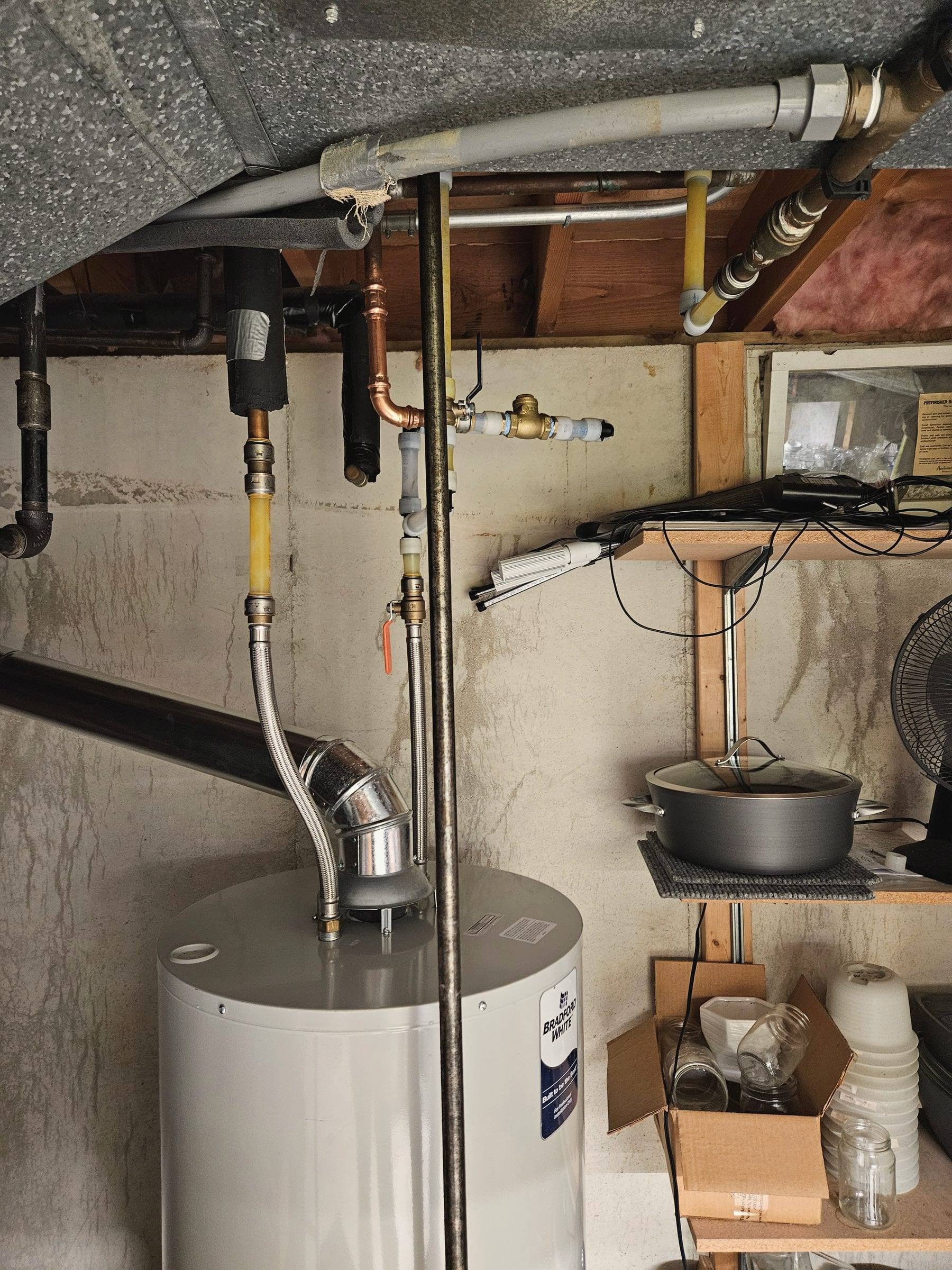
An electric tank water heater with new flex lines and venting in a basement
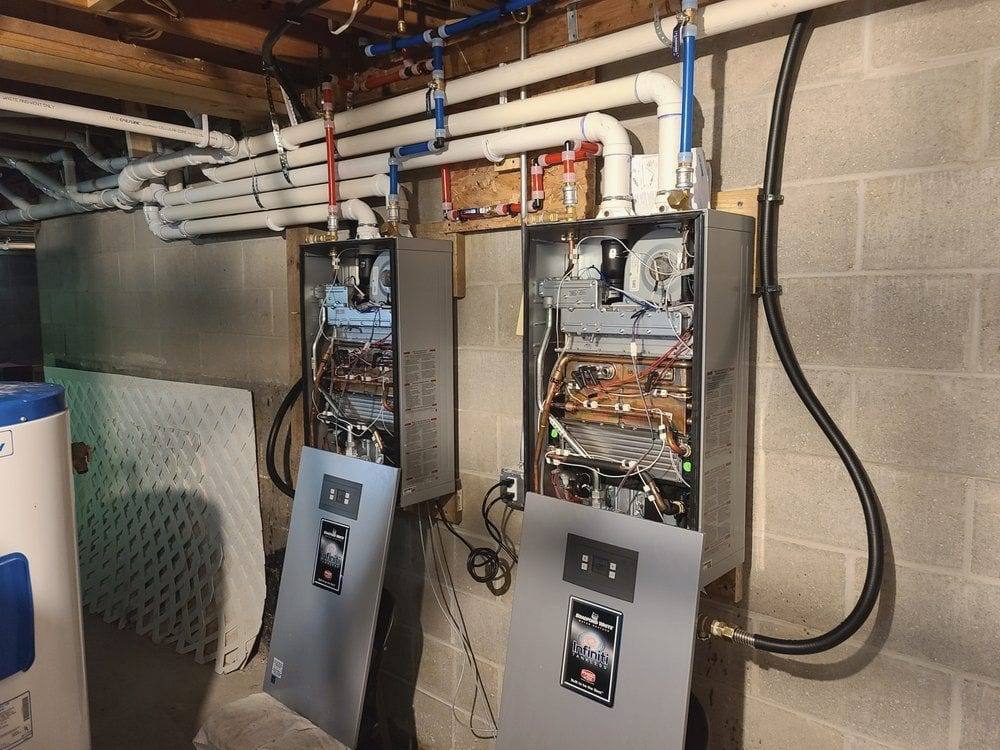
Two tankless water heaters with their covers off during service
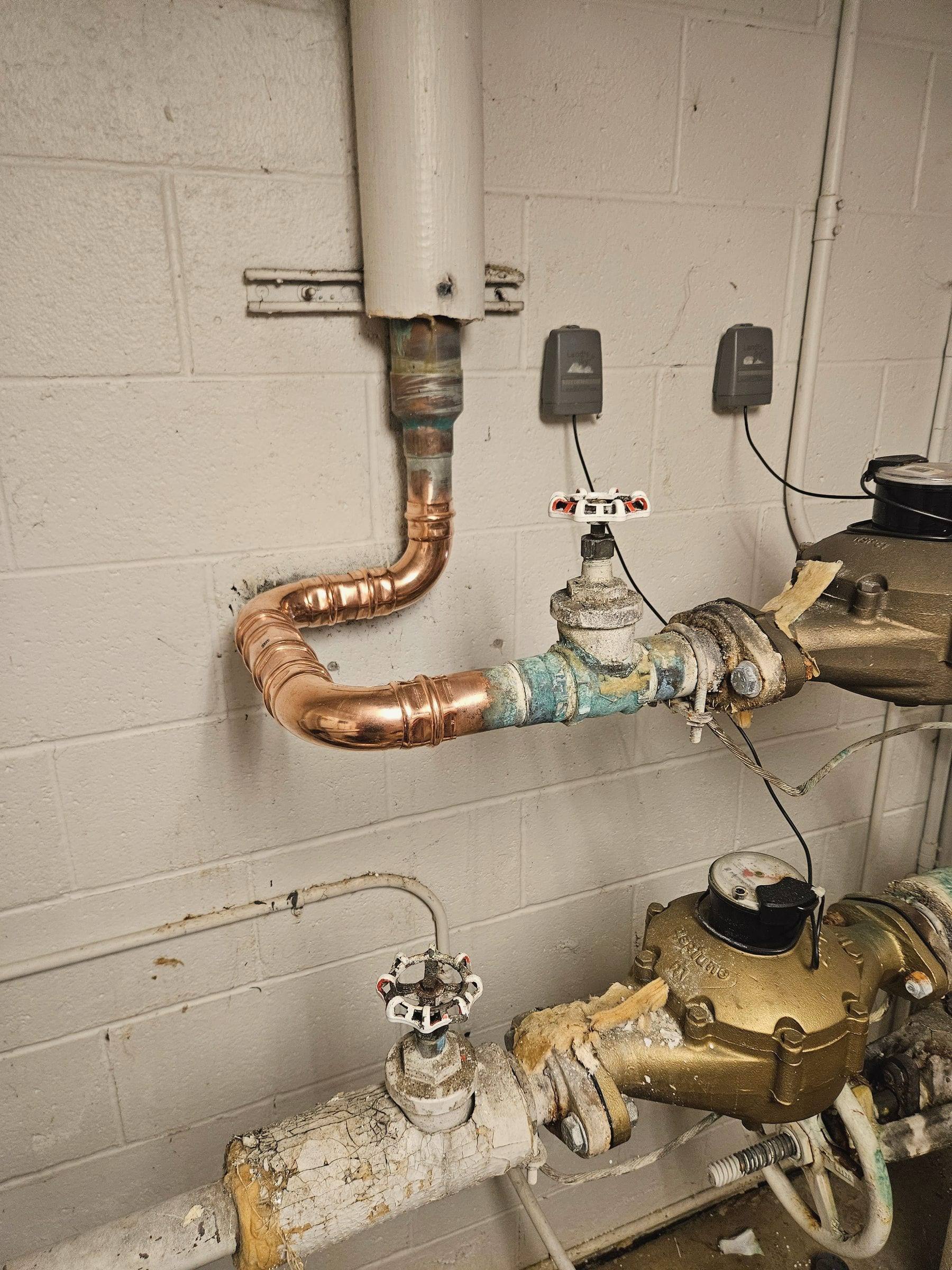
New copper piping tied into an old corroded galvanized water line at the meter
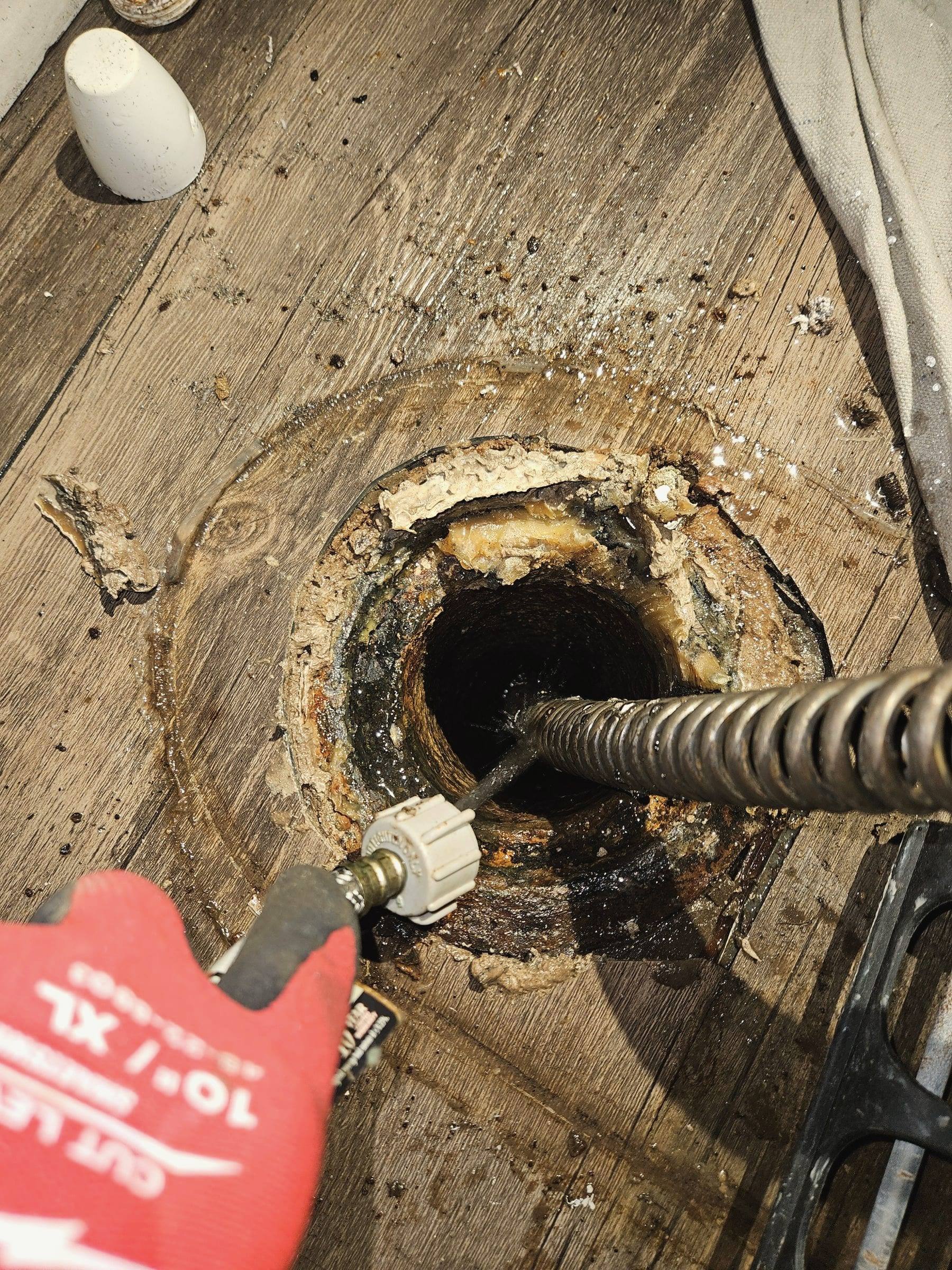
A gloved hand feeding a drain cable into a corroded cast iron floor drain
Talk to a licensed plumber
Tell us what you are seeing.
We will help you understand the problem, explain the options, and recommend the right next step.
When you call, we will ask
- How long has the issue been going on?
- Have you recently purchased the home?
- Is it a recurring issue?
Those answers often tell us whether we are looking at one failed part or a bigger pattern.